A roadmap that names names
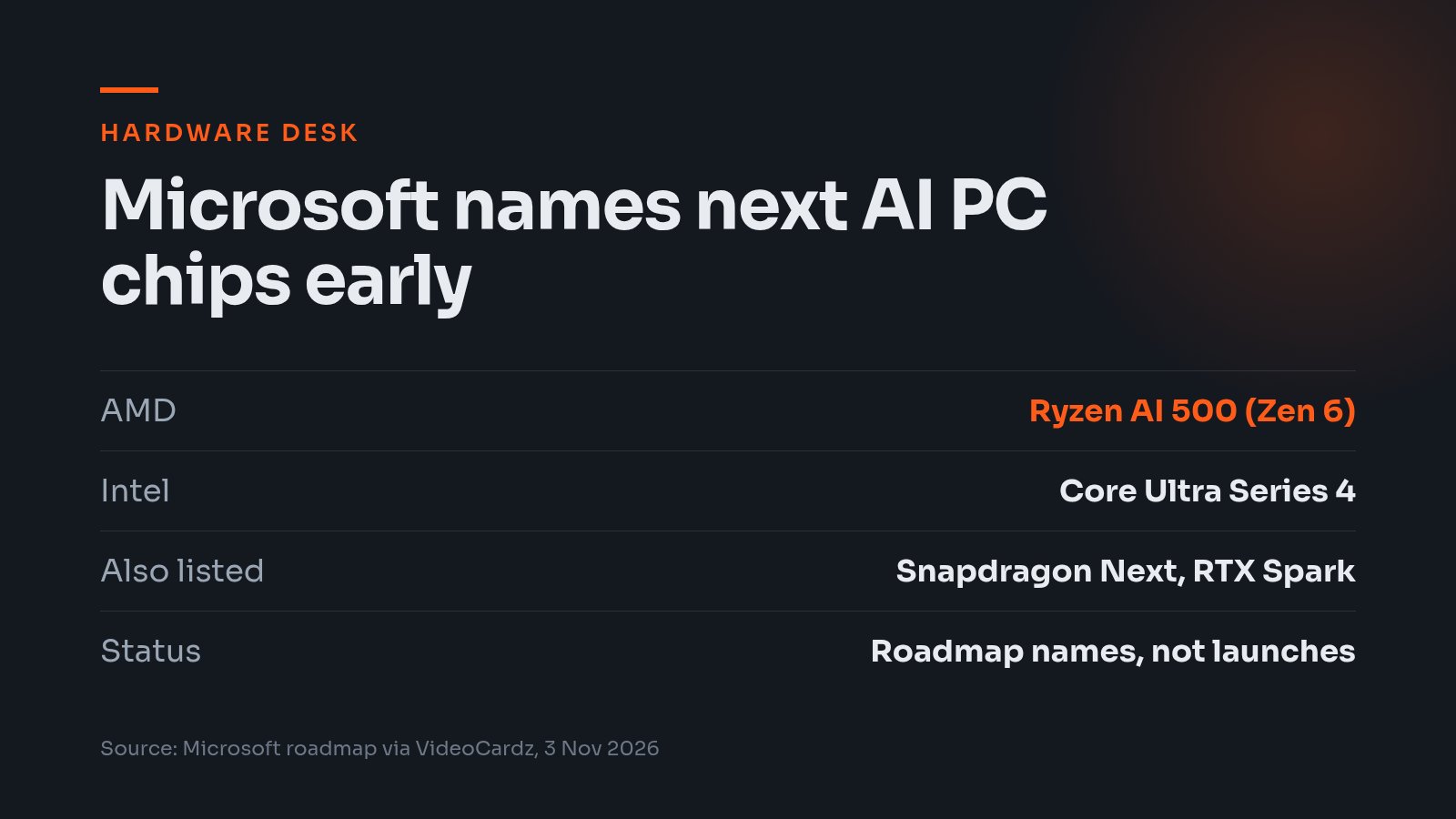
A Windows roadmap slide for hybrid intelligence has put the Ryzen AI 500 name in public ahead of AMD. VideoCardz reported on 3 November that Microsoft’s presentation lists AMD Ryzen AI 500 (Zen 6), Intel Core Ultra Series 4 (Nova Lake) and Snapdragon Next, and neither AMD nor Intel has officially confirmed the commercial names of those next-generation client chips.
These are names on a slide, not launched products. The photo was shared by HXL, and VideoCardz says it is not known when it was taken. Even so, the slide places Ryzen AI 500 and Core Ultra Series 4 next to the existing Ryzen AI 400 and Core Ultra Series 3 families.
Memory decides the tier
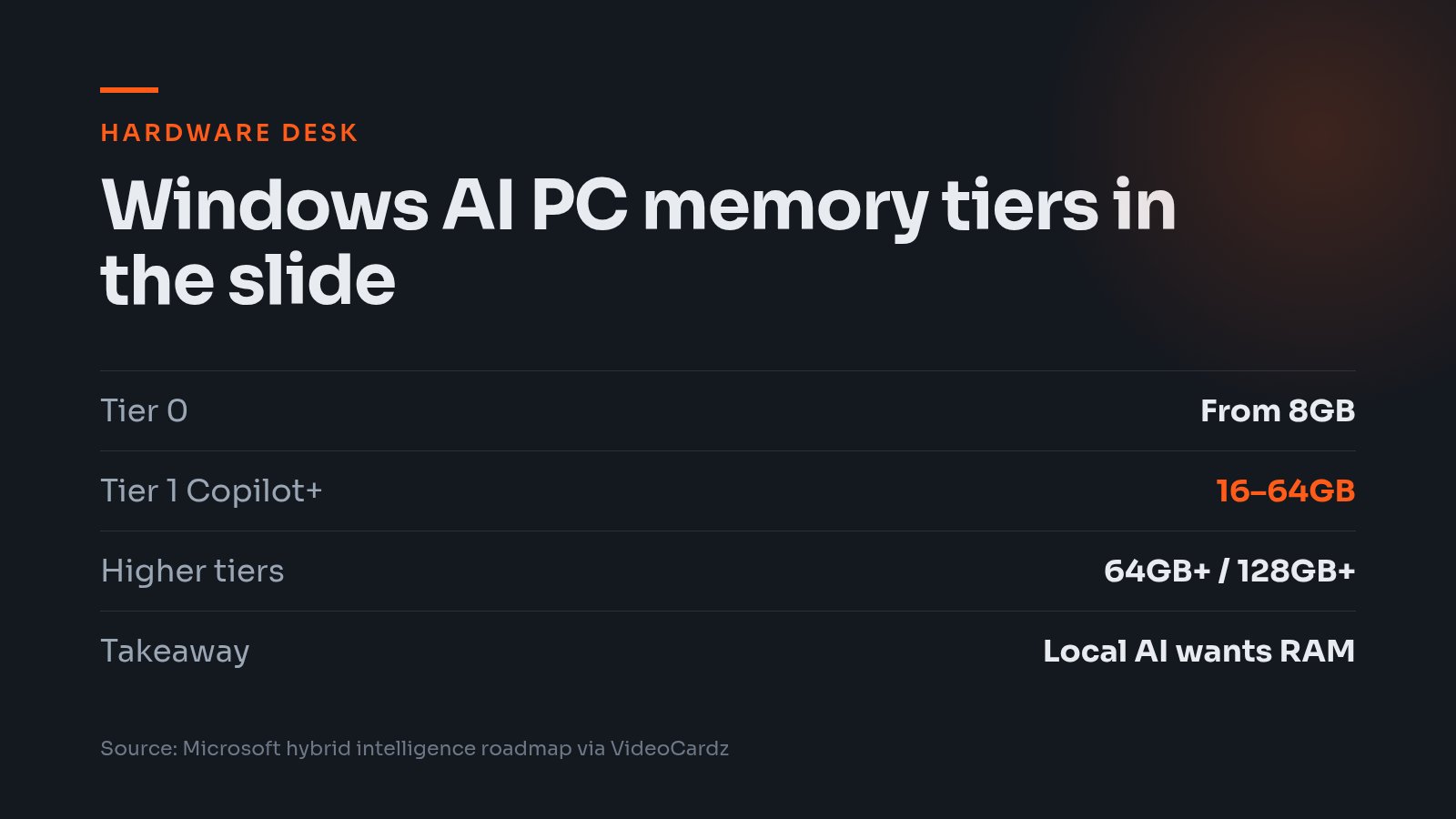
The slide splits Windows machines into four tiers by local AI ability. Tier 0 is a standard Windows PC starting at 8GB of memory. Tier 1 is Copilot+ PCs in 16GB, 32GB and 64GB configurations. For systems with 64GB or more, the roadmap mentions Ryzen AI MAX+ 400, NVIDIA RTX Spark and Intel Core Ultra Next.
Tier 2, Builder PCs with 128GB or more memory, is meant for developing and serving AI models locally. It lists Ryzen AI MAX+ 400, RTX Spark, Core Ultra Next and Snapdragon Next. VideoCardz guesses Snapdragon Next means the X3 series, and says Core Ultra Next is a generic reference, so it is unclear whether it means Nova Lake or a later generation.
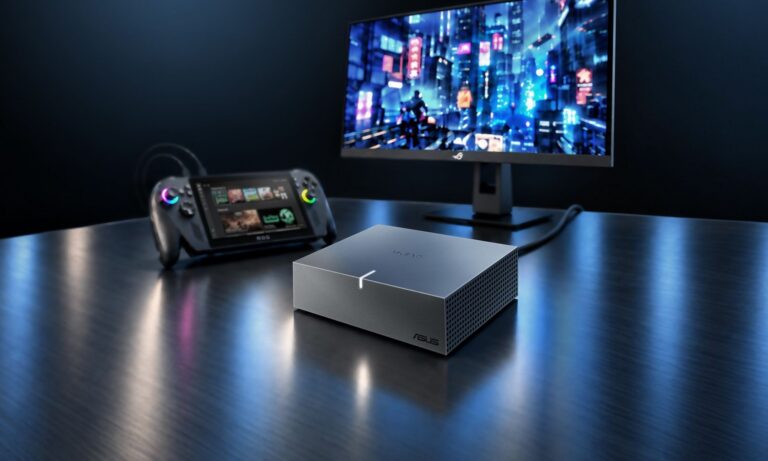
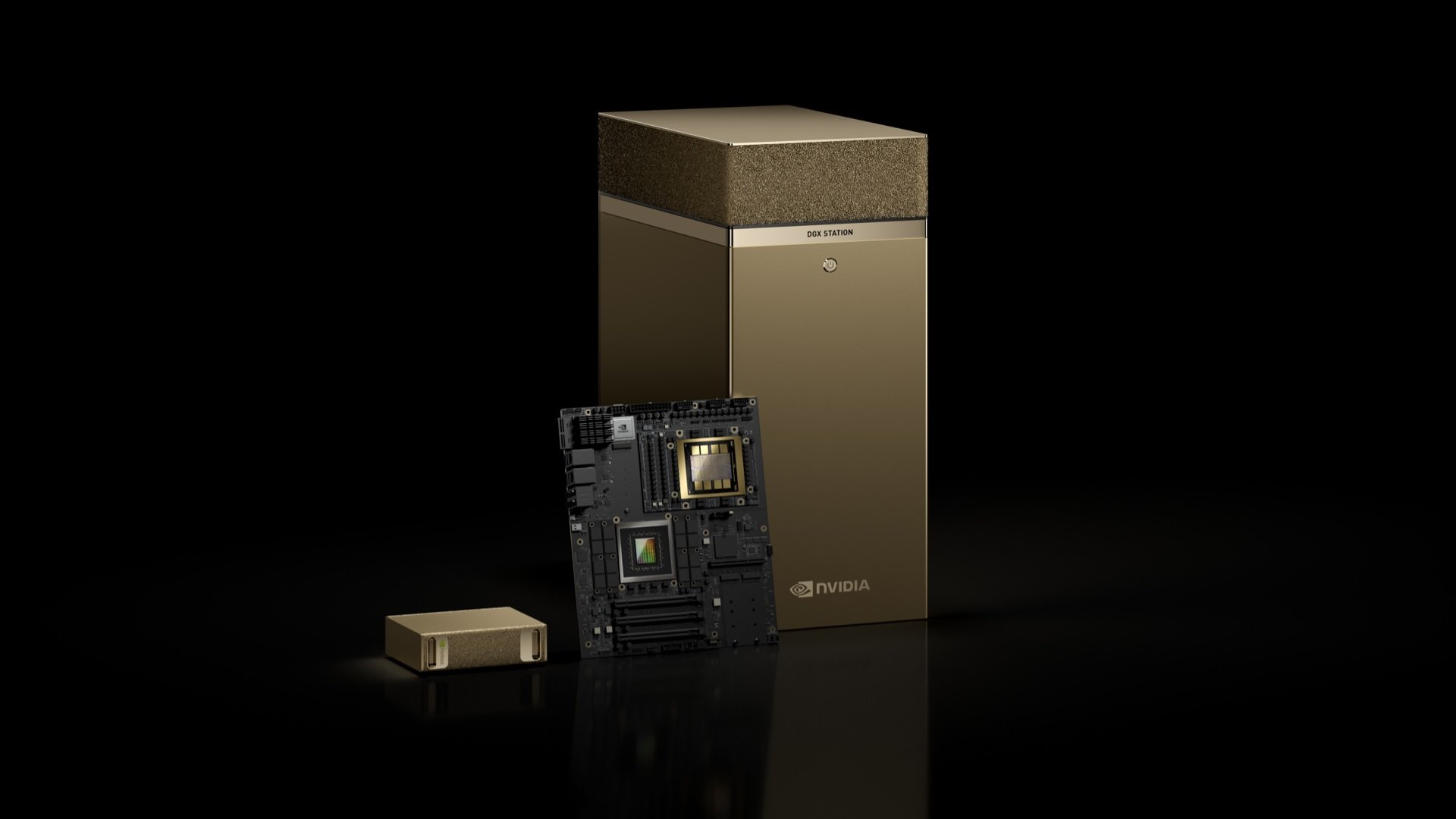
Tier 3 covers workstation and supercomputer-class hardware, with Intel Crescent Island, the NVIDIA GB300 DGX Station and an unspecified “AMD Next”. Crescent Island is an announced Intel inference GPU architecture with up to 480GB of LPDDR5X, so it is not a hint at a Core Ultra chip. Compact Spark-class boxes such as ASUS’s ProArt GR1X sit in the same local-AI territory.
Who gets to announce what
We think this is a quiet shift in who controls the story. A platform owner can put next-generation silicon names on a slide for developers before AMD or Intel have said them aloud. AMD’s record quarter hid a 40% slump in its gaming business, and Intel is pitching Nova Lake as a desktop comeback while telling investors the PC market will shrink, so both have reasons to want the next generation talked about on their own terms.
The practical advice is to wait. Nothing here has a price, a launch date or a spec sheet, and the memory tiers are the useful part: if you want local AI models on a PC, plan for 64GB or more rather than a headline chip name. If you are speccing a machine now, our PC Builder is a sensible place to start.