Epic picks a side
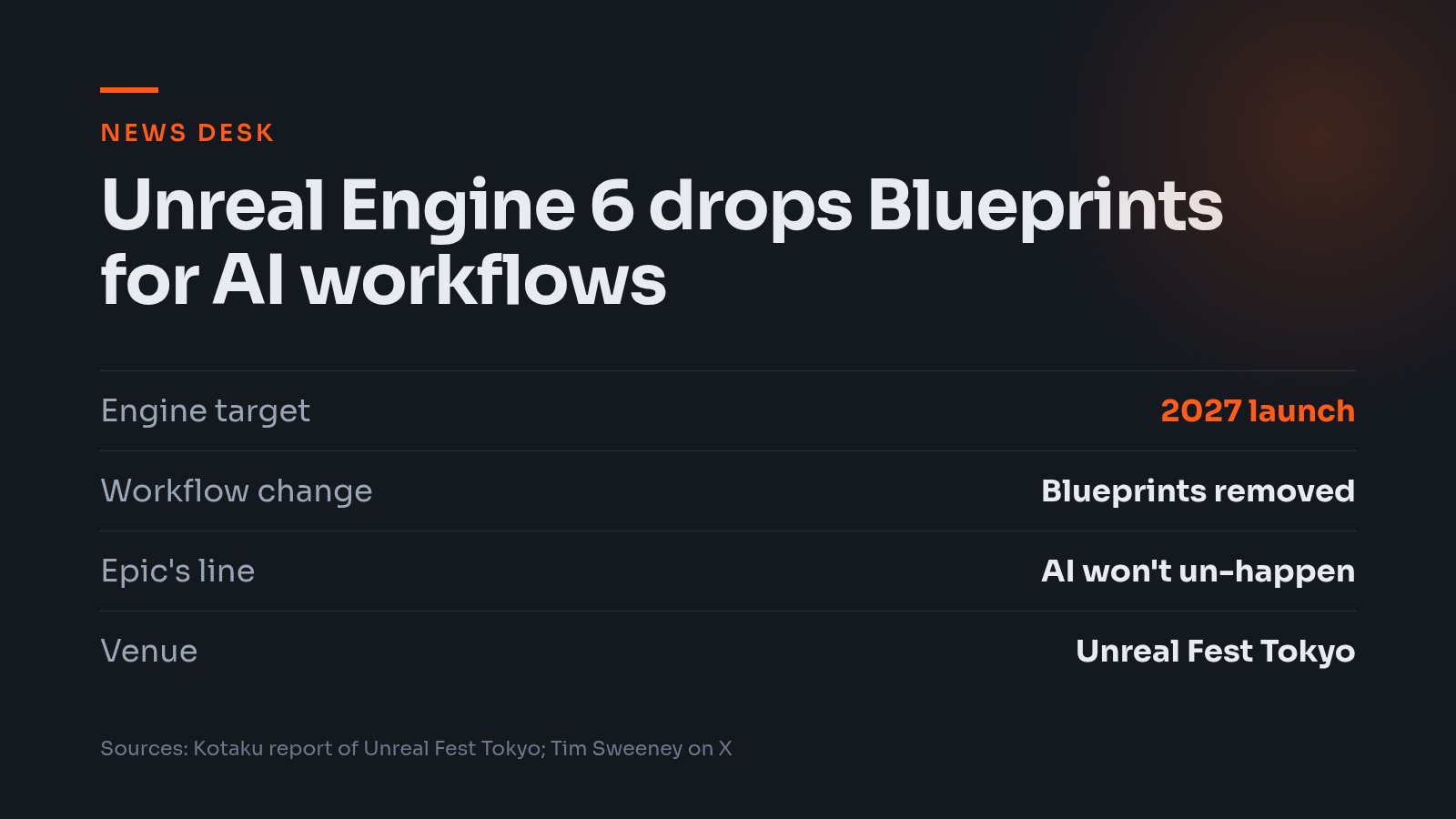
Unreal Engine 6 AI workflows are no longer a rumour or a roadmap hint: Epic Games took them to developers at Unreal Fest Tokyo and doubled down. Kotaku’s report (5 November 2026), the engine due in 2027 puts a far greater emphasis on AI, and Epic is sticking with its plan to remove Blueprints.
Blueprints is the visual system many developers use to define how characters and events behave in a game, and Kotaku notes it has existed in the engine for decades. Epic promises “AI-assisted migration” as it moves away from Blueprints and other long-standing systems. Kotaku says developers have already questioned the plan.
Painful first, faster later
Kotaku reports that CEO Tim Sweeney appeared on stage ostensibly to apologise, then defended the decision. Citing a Famitsu report, it quotes him: “While it will be painful at first, subsequent productivity will greatly improve.” Per the same report, he said AI in the engine could lift productivity to as much as four times that of development without AI workflows. That is Sweeney’s claim as relayed by the press; we have no independent figure to set against it.
A significant gap in competitive ability will grow between those that adopt AI tools and those that don’t… This trend is unlikely to be reversed.
Tim Sweeney, in comments before his keynote, as reported by Denfaminico Gamer via Kotaku
The clarification is not a retreat
Later that day Sweeney responded on X. He said the Japanese coverage “appears to be a translation from English to Japanese and back which has picked up some characteristic nuances along the way,” and restated it plainly: “AI is happening, AI won’t un-happen, and Epic is going all-in to bring the gains to all game developers.” Kotaku added that update at 9:54 p.m. ET on 5 November, which is 02:54 UTC on 6 November.
Our read: the translation point may soften the tone, but it does not soften the direction. The clarification keeps “all-in”, and nothing in it walks back the removal of Blueprints. Studios that build on Unreal now have a 2027 deadline to plan around, and a migration tool they will have to trust.

We also think the risk lands unevenly. Big teams can staff a migration. Small ones leaning on Blueprints may not have that luxury, and the wider debate over AI in game production is already pressing on storefronts: see how Valve told developers to out-build AI clones after Next Fest, and how Steam’s build review is running behind.
Kotaku also points out that more Japanese studios, Square Enix and Atlus among them, have moved from in-house engines to Unreal in recent years, while some remain cautious. Epic has shown no sign of slowing down for them. Details on how the migration will actually work have not been published in the reporting we have seen, and that is the part developers will be waiting on.