Console ML upscaling arrives
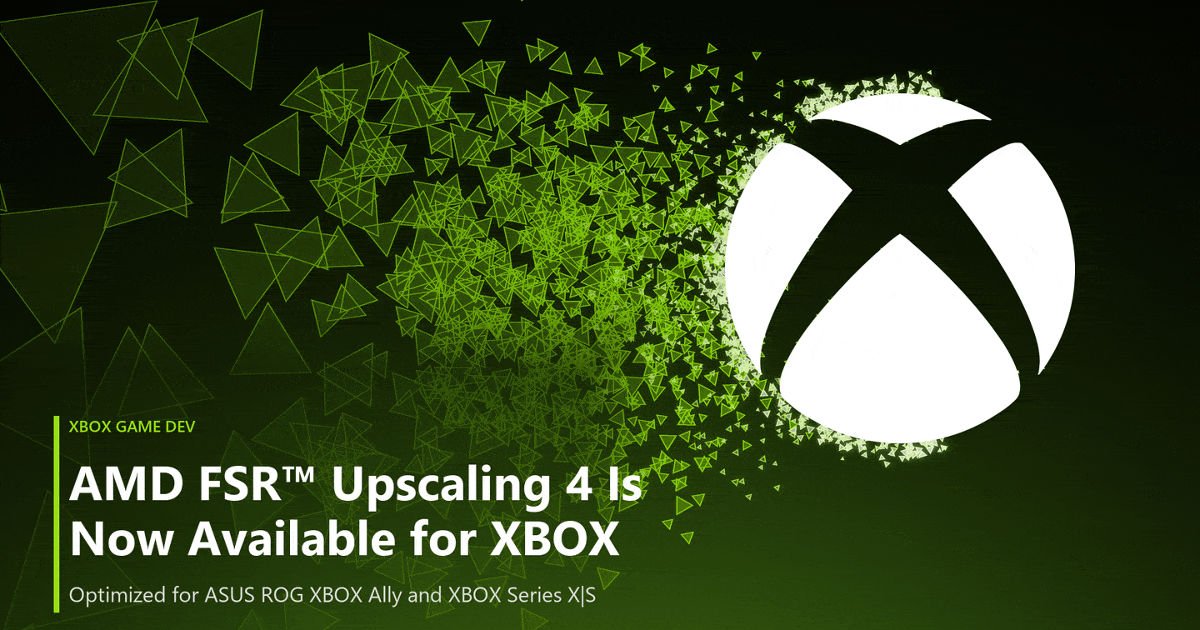
FSR upscaling on Xbox just stopped being a PC-only AMD story. AMD FSR Upscaling 4.1.2 is now available to Xbox Series X|S developers with the October 2026 Microsoft GDK, and AMD’s GPUOpen post calls it the first time ML-based AMD FSR Upscaling has reached Xbox consoles.
Microsoft and AMD both published their announcements on 4 November 2026. It’s a developer release, so what players eventually see depends on studios wiring it into their games. Microsoft says it worked with AMD to make ML upscaling “practical” on the consoles’ RDNA 2-based GPUs, and its Game Dev post includes the numbers that matter.
Two models, one trade-off
The GDK sample ships a Full INT8 model and a new Lite INT8 model. AMD says Lite is less than half the size and has a lower upscaling cost, and that both run on Series X and Series S. Upscaler memory is the same for both because it depends on render and display resolution, not on the model, which makes the choice a performance trade-off rather than a memory one.
Microsoft’s GDK sample measurements put a price on that trade-off:
| Console | INT8 model | Output | GPU time (ms) |
|---|---|---|---|
| Series X | Lite | 1440p | 1.29 |
| Series X | Lite | 4K | 2.75 |
| Series X | Full | 1440p | 1.95 |
| Series X | Full | 4K | 3.86 |
| Series S | Lite | 1080p | 1.9 |
| Series S | Lite | 1440p | 3.4 |
| Series S | Full | 1080p | 2.9 |
| Series S | Full | 1440p | 5.2 |
Lite is the Series S answer
Look at the Series S rows. Full at 1440p costs up to 5.2 ms in the sample; Lite at the same output resolution costs 3.4 ms. At 1080p it’s 2.9 ms against 1.9 ms. The Verge pointed out that 5.2 ms is enough to cut a 60fps game down to 45fps, though developers can cycle through the modes and pick their own balance.
The Series X gap is smaller in absolute terms: 1.95 ms for Full against 1.29 ms for Lite at 1440p, and 3.86 ms against 2.75 ms at 4K. Still, a saving of more than 1 ms is a lot to give back at 4K when frame budgets are tight.
We think Lite is the model most console games will end up shipping, especially on Series S, where every millisecond is spoken for. The tables measure cost, not image quality, and the sample lets developers compare Full, Lite and FSR 3 in the same scene. Full stays the option for titles that can afford it.
Same SDK, handhelds included
The same AMD FSR SDK also covers ROG Xbox Ally handhelds. The ROG Xbox Ally, Ally X and Ally X20 are Windows devices, so developers integrate through the standard SDK. SDK 2.4 supports the Ryzen AI Z2 Extreme and Ryzen Z2 A processors in them using an INT8 model, and it’s the same release that brought ML upscaling to Radeon RX 6000 cards, which we covered in our look at FSR Upscaling 4.1 on RX 6000.
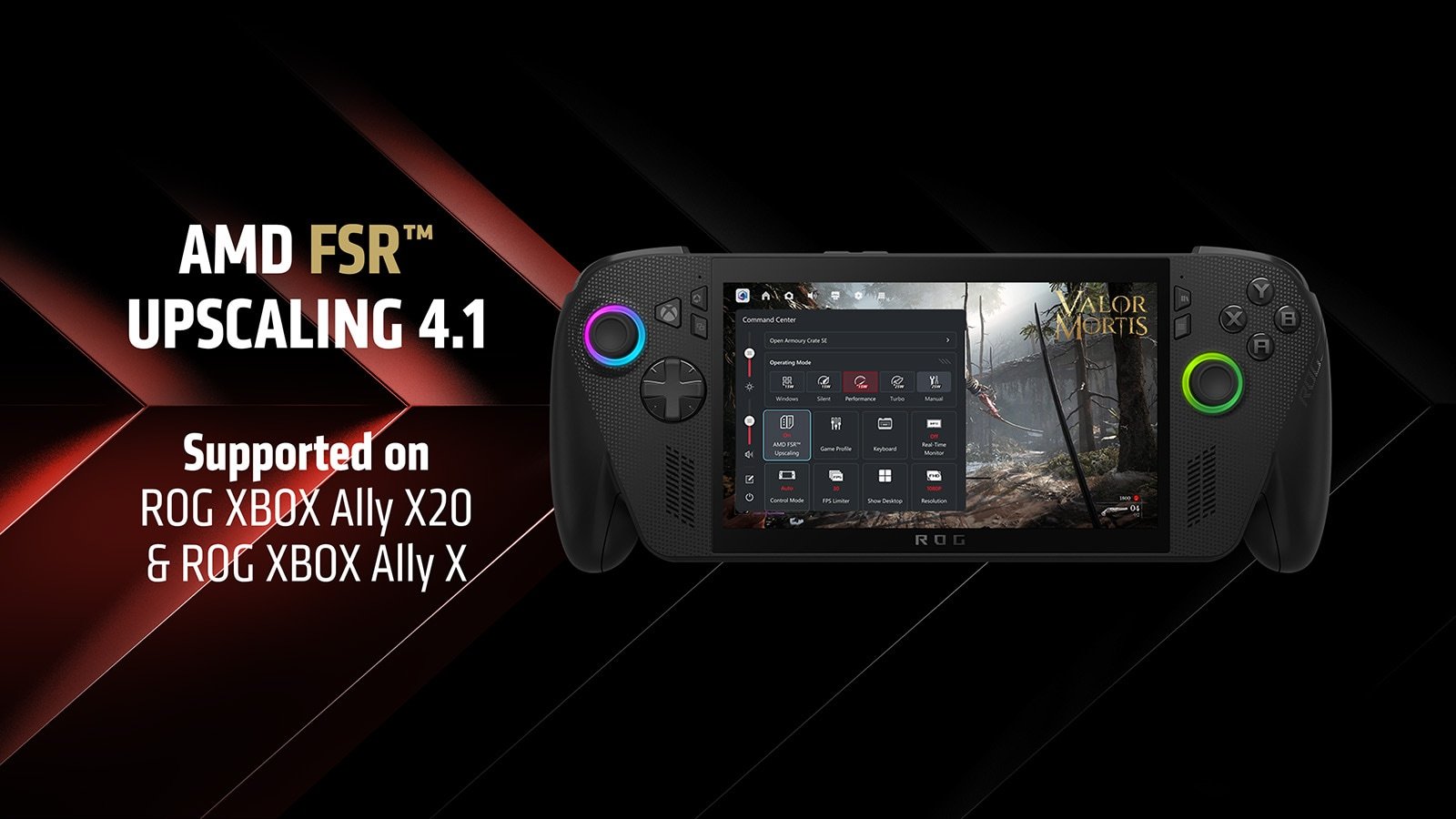
Players with an Ally X or Ally X20 don’t have to wait for studios: ASUS has a preview driver that upgrades DirectX 12 games using FSR 3.1 or newer, with ROG Xbox Ally support to follow in a later update. AMD’s own advice is still to integrate the latest SDK natively.
That’s the real shift here. One integration now scales from handhelds to consoles to desktop PCs, which matters when you weigh AMD against Nvidia as a software-stack decision. Nvidia’s side of that fight is covered in our DLSS 5 piece. What we’d like to see next is a first Series S game that says which model it picked.