Inkjet OLED plan
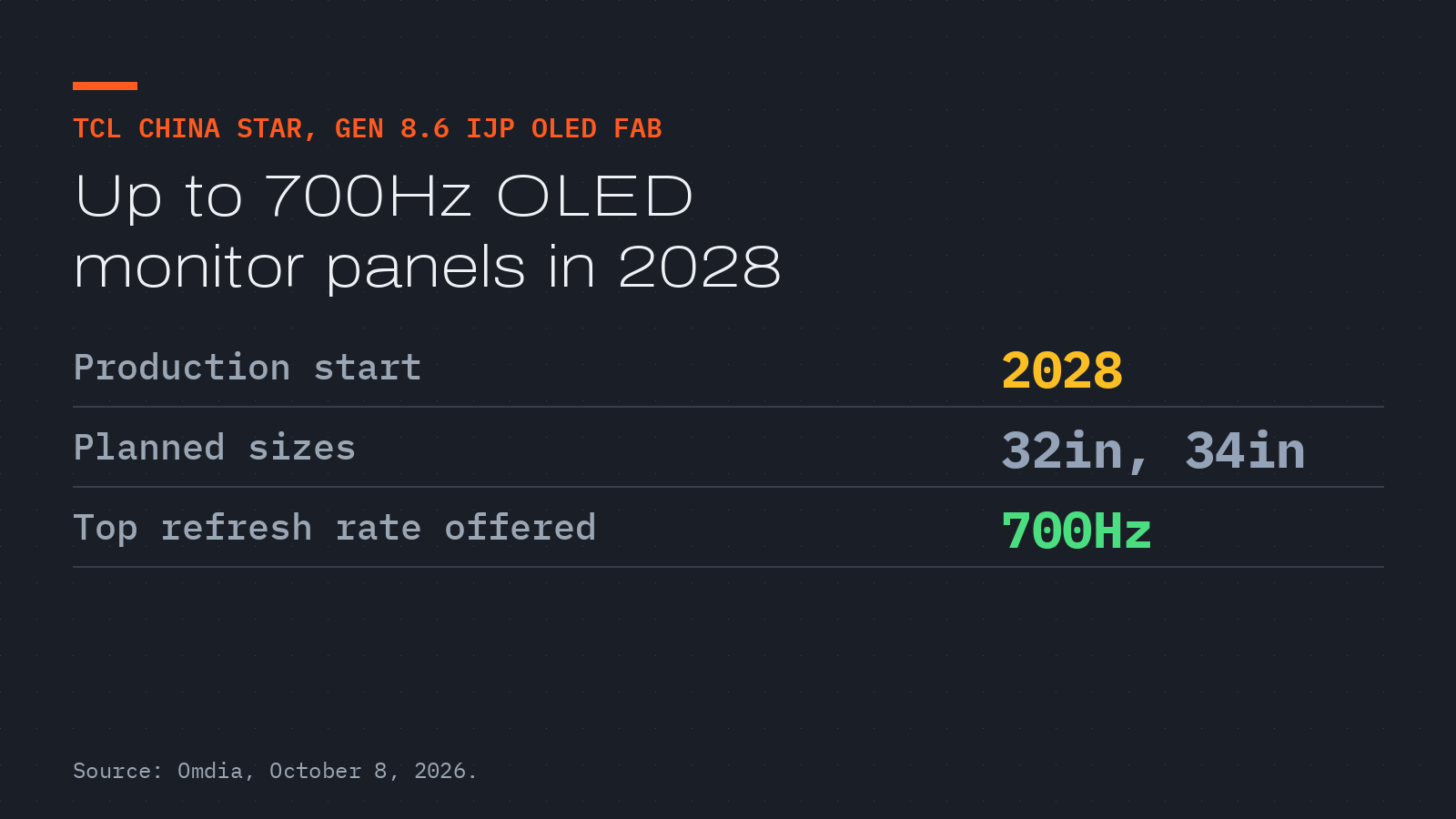
TCL China Star plans to make OLED monitor panels with refresh rates of up to 700Hz from 2028, using inkjet printing rather than the evaporation process Samsung Display and LG Display use today. The plan comes from an Omdia report published October 8 on the OLED monitor market.
Omdia says TCL China Star’s Gen 8.6 IJP OLED fab “is scheduled to begin production in 2028, with plans for larger panels, including 32-inch and 34-inch sizes and refresh rate offerings of up to 700Hz.” It would be the first company to mass-produce inkjet-printed OLED monitor panels at Gen 8.6.
700Hz isn’t the news. The process is
OLED monitors above 700Hz already exist. PC Gamer points to an Asus WOLED that hits 720Hz at 1080p in a 24.5-inch size and is set to cost $1,099. It also notes that Omdia doesn’t say the 700Hz panels will be the 32- or 34-inch ones, so those could be separate products.
| Evaporation (today) | Inkjet printing (IJP) | |
|---|---|---|
| How OLED material is laid down | Evaporated through a fine mask | Printed directly onto the substrate |
| Material waste | High, much never reaches the panel | Much lower |
| Who uses it for monitors | Samsung Display, LG Display | TCL China Star, from 2026 |
Less waste should mean cheaper panels. TCL China Star has already started on a smaller scale: its Gen 5.5 fab was due to begin shipping 27-inch UHD 120Hz IJP OLED panels in the third quarter of 2026, for an MSI creator monitor.
The market it’s aiming at
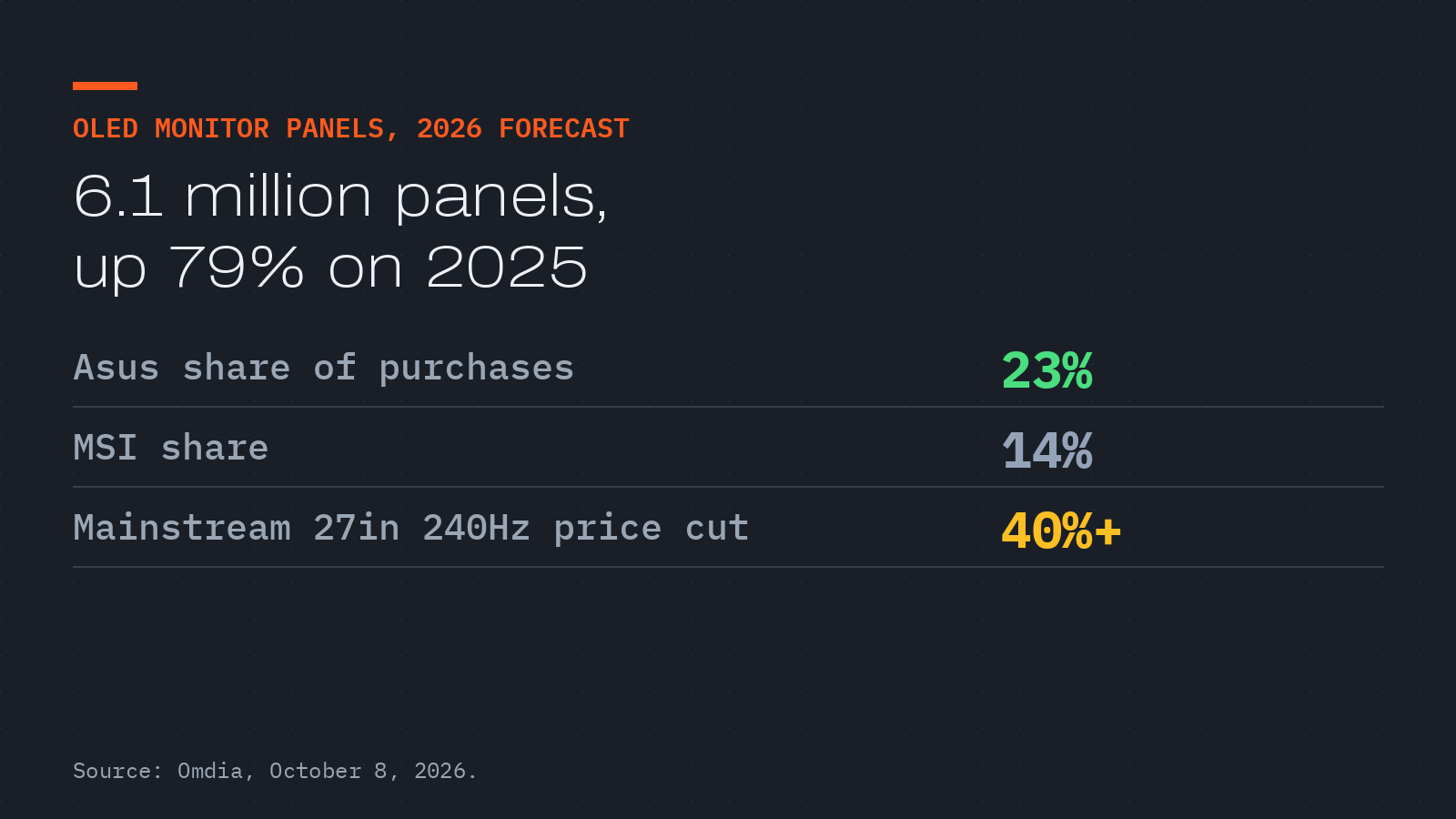
Omdia forecasts 6.1 million OLED monitor panels shipped in 2026, up 79% on 2025. Asus is the biggest buyer at 23%, ahead of MSI at 14% and TPV at 12%. Mainstream 27-inch 240Hz OLED gaming monitors have had price cuts of more than 40% this year, and Omdia expects premium OLED monitors, at about $350 in the first half of 2026, to approach $300 by 2027.
Who should buy, and who should wait
- Buy now if you want a 27-inch 240Hz OLED. Prices have already fallen hard, and 2028 is a long time to wait for a panel you may not need.
- Wait if you play competitive shooters and want 500Hz-plus without paying launch prices. A second high-volume, lower-cost supplier is the most likely thing to bring that segment down.
- Don’t plan around the spec yet. 700Hz is an “up to” figure from a fab that hasn’t started production, with no resolution or sizes tied to it.
Omdia principal analyst Nick Jiang says the Gen 8.6 capacity “is projected to reshape OLED monitor supply chain dynamics”. For buyers, the point is a third panel maker that doesn’t need the mask.