Fresh Ampere production
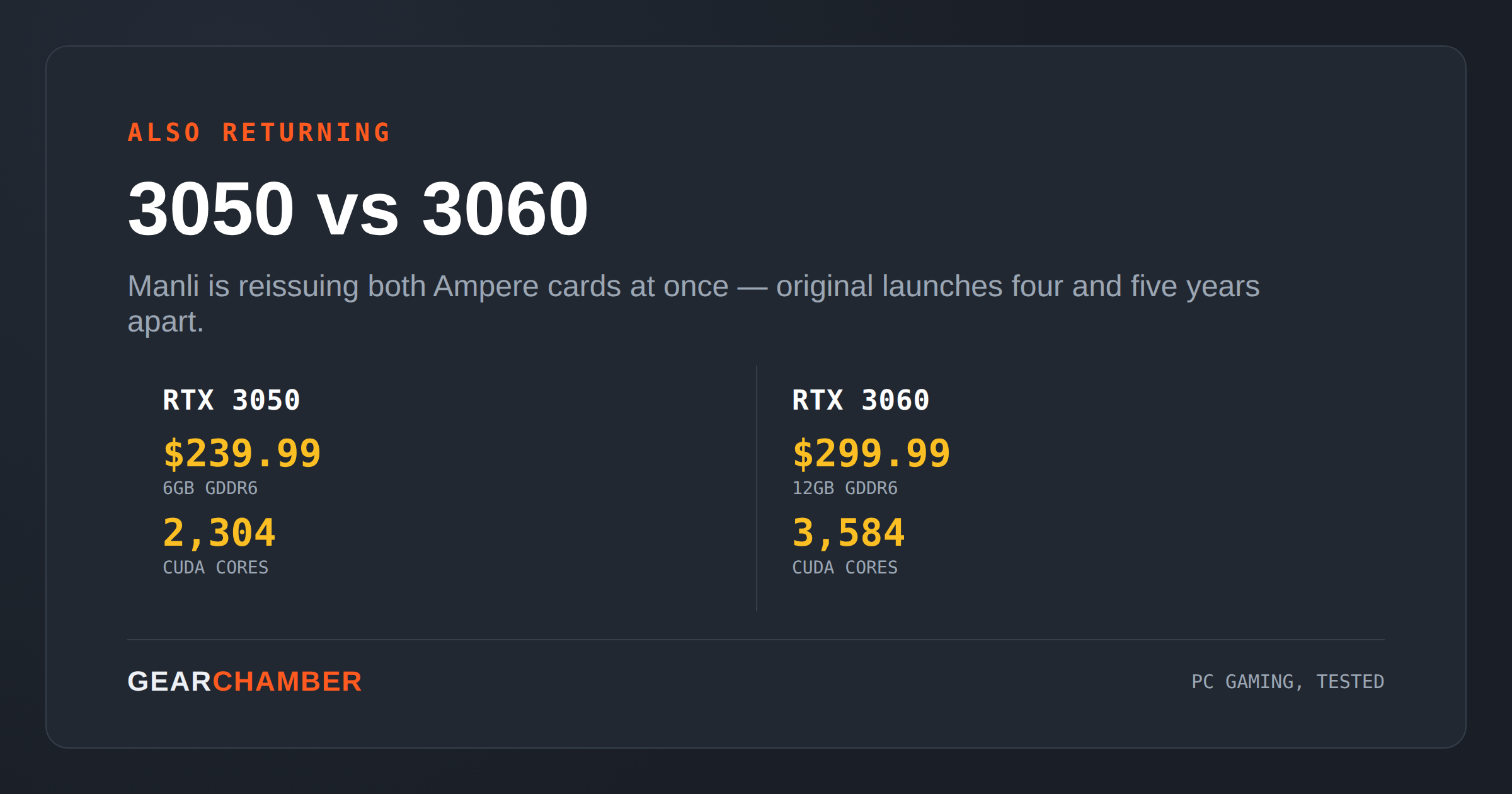
Nvidia board partner Manli has put a brand new RTX 3050 6GB up for sale at $239.99, alongside a returning RTX 3060 12GB at $299.99. Neither is a new chip. The RTX 3050 originally launched in January 2022, and the RTX 3060 in February 2021 — Manli is simply running fresh production of four- and five-year-old Ampere silicon and selling it as current inventory, because the alternative is not selling an entry-level card at all.
The specs are unchanged from launch, for better or worse. The RTX 3050 6GB Nebula comes in Single and Twin cooler variants, both built around 2,304 CUDA cores at a 1,042MHz base and 1,470MHz boost clock, paired with 6GB of GDDR6 on a 96-bit bus for 168GB/s of bandwidth. It draws just 70W and needs no auxiliary power connector, running entirely off the PCIe slot. The RTX 3060 board, listed under Manli’s M2521+N630 model number, keeps its original 3,584 CUDA cores and 12GB of GDDR6 at 15Gbps across a 192-bit bus. Neither card gets DLSS 4 or any of the frame-generation features Nvidia has shipped on newer architectures since Ampere.
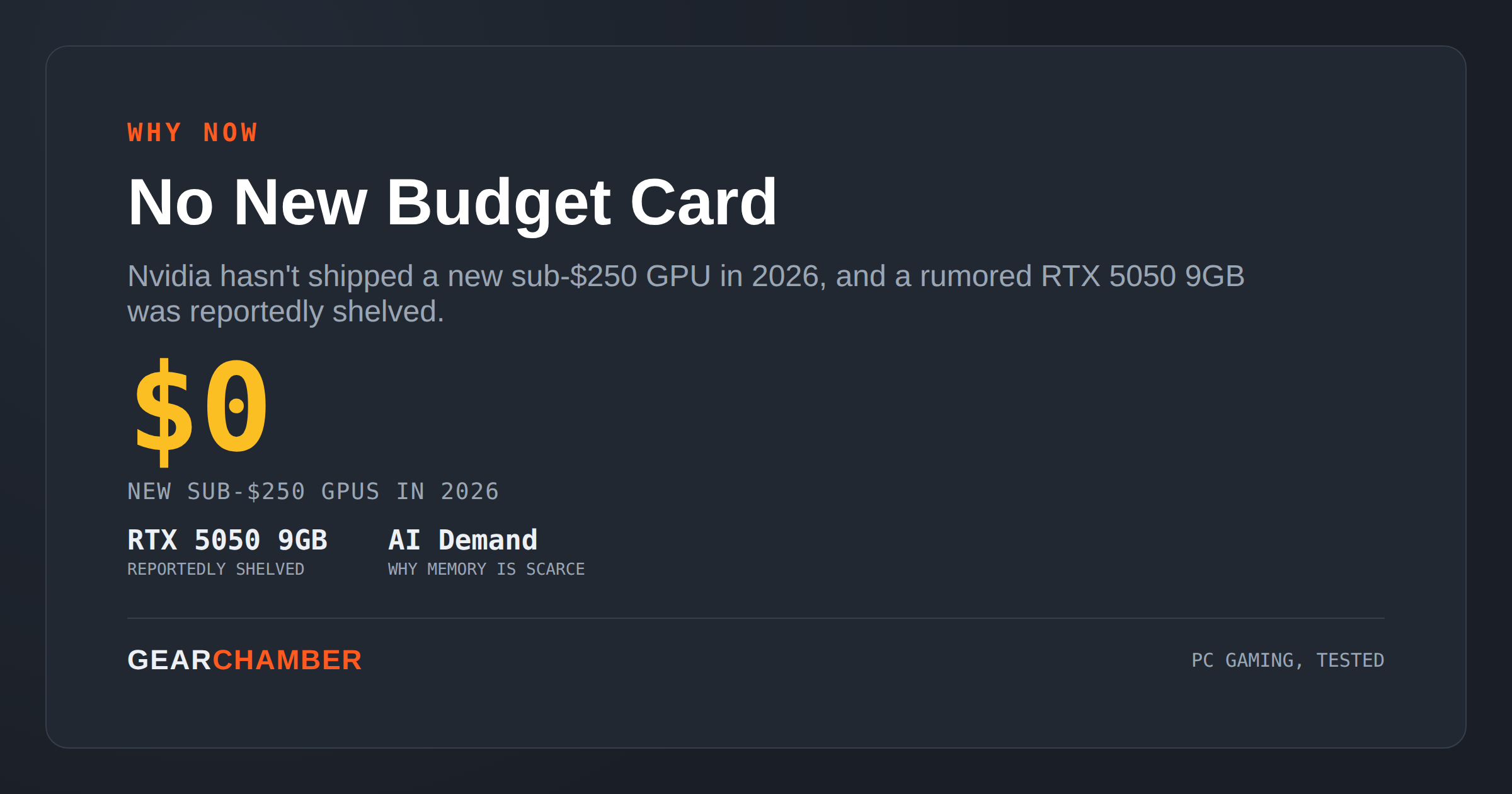
The reason this is happening now traces straight back to the memory shortage that’s already pushed RTX 5070 and 5060 Ti pricing up as much as 39% in the past two months: GDDR6 and DRAM supply is being pulled toward AI accelerators, and there’s reportedly no new low-end GPU release planned for the rest of 2026 beyond rumored RTX 50-series Super refreshes. A rumored RTX 5050 9GB was said to be shelved amid the same supply crunch. With Nvidia not fielding a genuinely new sub-$250 card, board partners like Manli are left with Ampere-era chip supply, older and cheaper GDDR6 that’s easier to source at volume, and a real gap at the bottom of the market to fill. Reissuing a five-year-old design is, at minimum, cheaper than trying to build something new around memory that’s currently being outbid by data centers.
Availability so far is limited to Asia, the Middle East, and parts of Europe, with no confirmation yet of a US retail listing. Buyers should go in with clear expectations: 6GB of VRAM was already a tight fit for some 2022-era games, and it hasn’t gotten more comfortable since. At $239.99, the new RTX 3050 is also competing against modern integrated graphics from AMD and Intel’s latest chips, plus Nvidia’s own upcoming RTX Spark SoC, all of which are closing the gap on low-end discrete GPUs without a separate card at all. This is less a graphics card launch than a symptom of the shortage — worth watching as a sign of how much further up the stack that supply squeeze reaches, and worth skipping unless a genuinely new budget option still hasn’t shown up by the time you actually need to buy.