Entry-level RDNA 4
AMD has filled out the bottom of its RDNA 4 lineup with the Radeon RX 9050, an entry-level card built for 1080p gaming at $279, with a full spec sheet and driver support confirmed this week through AMD Software: Adrenalin Edition 26.8.1. The card comes in two distinct memory configurations that behave nothing alike, and only the better one is actually available to buy on its own — the other is locked to prebuilt systems, reviving a familiar argument about how much VRAM a budget GPU can get away with in 2026.
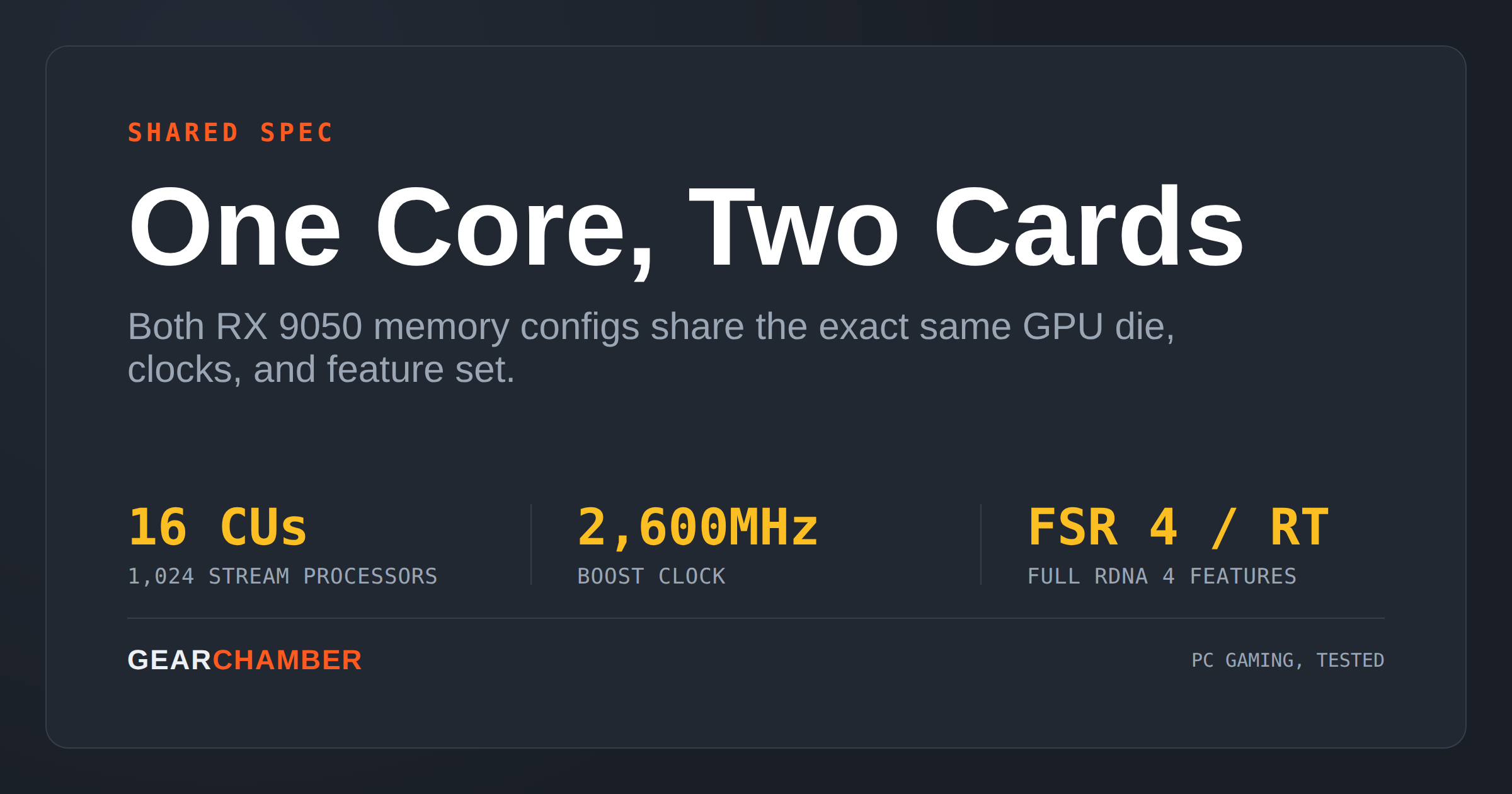
Both versions share the same GPU core: 16 compute units, 1,024 stream processors, and identical clock speeds, at a 92W board power that needs no external power connector. Where they split is memory. The retail 8GB card runs a 128-bit bus with 288GB/s of bandwidth, while the OEM-only 4GB variant is cut down to a 64-bit bus and 144GB/s — literally half the memory bandwidth on top of half the capacity. AMD has also trimmed the Infinity Cache on the 4GB version, down to 16MB. Both configurations support the full RDNA 4 feature set, including FSR 4 upscaling, ray tracing, and AV1 encode.
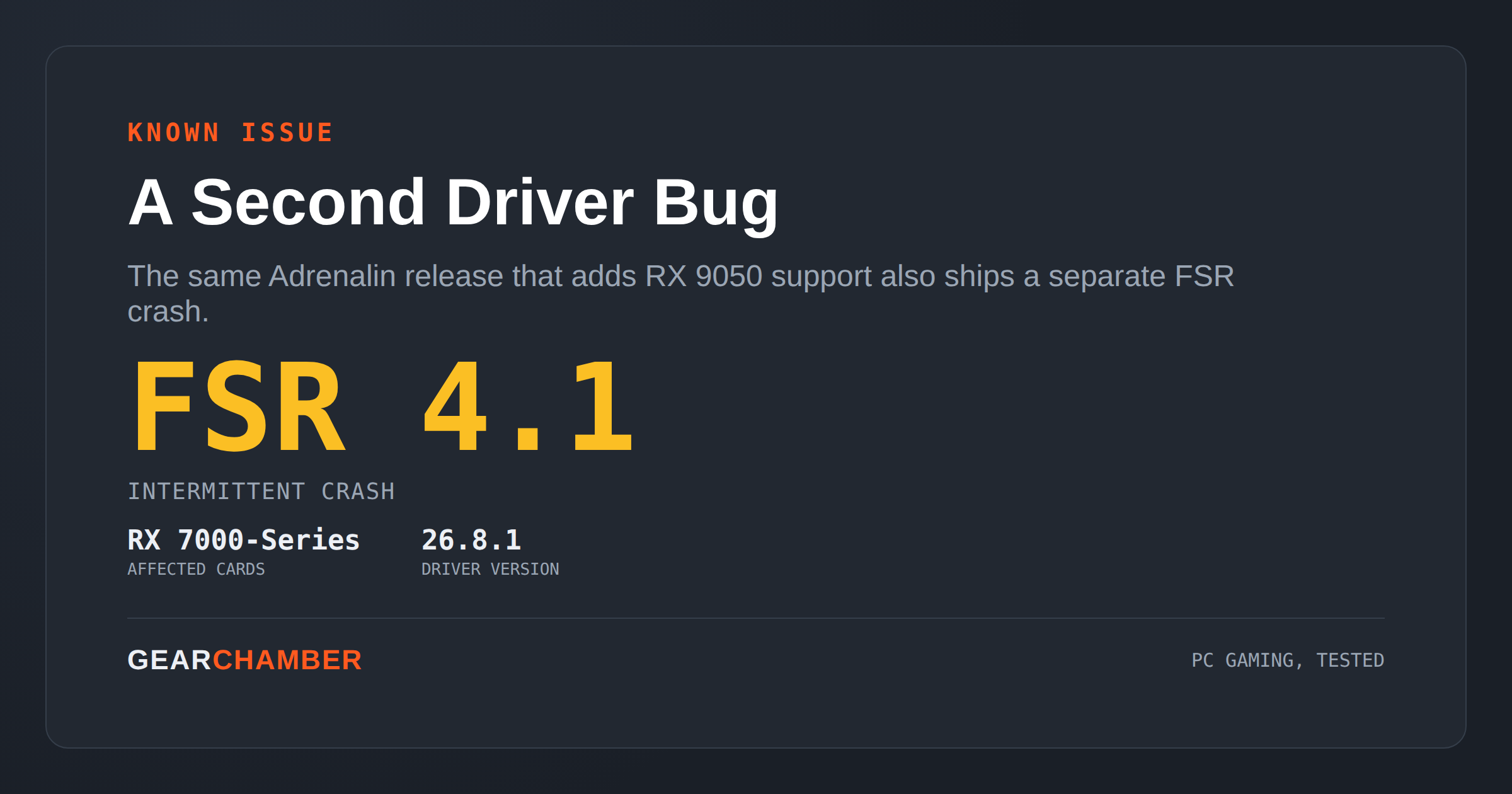
The 4GB variant isn’t sold as a standalone product; it exists specifically to hit a price point inside prebuilt systems from AMD’s OEM partners. That’s a pattern the industry has leaned on before — Nvidia took heat for a similarly cut-down 4GB RTX 3050 aimed at pre-built desktops in past years — and it means two PCs advertised as having an “RX 9050” can perform meaningfully differently depending on which memory config shipped inside. AMD launched the 8GB card in Asia-Pacific, Japan, and Latin America first, with the full spec sheet for both versions confirmed on August 22, roughly a week before wider driver support landed. Adrenalin 26.8.1 also brings its own baggage: AMD has flagged an intermittent crash with FSR Upscaling 4.1 enabled on Radeon RX 7000-series cards, a separate issue from the 9050 launch but worth knowing if you’re updating drivers on an older Radeon card this week.
For anyone actually shopping at this price tier, the distinction matters more than the shared model name suggests. If you’re buying an RX 9050 as a standalone card, you’re getting the 8GB version by default since that’s the only one sold at retail — the 4GB variant should only ever show up bundled inside a prebuilt. The real trap is a prebuilt system spec sheet that just lists “AMD Radeon RX 9050” without specifying memory size; at this price point, that’s worth a direct question to the seller before buying, since the two cards will not deliver the same 1080p performance once VRAM becomes the bottleneck in newer titles.