Critics warm to Danchi Days
Danchi Days reviews are warm, and the headline number is easy to like: an 83, OpenCritic’s Top Critic Average. The catch is the sample. OpenCritic lists only four critic reviews in total, so we read that 83 as an early, friendly signal for a gentle game, not a settled verdict.
Analgesic Productions published the adventure on PC on 29 October 2026, and its Steam store page credits sandy powder, Melos Han-Tani, mogumu and gingham games as developers. It describes a 5-chapter adventure in which you talk to your neighbours to bring your hometown back together, getting people to RSVP to your festival and reading their 2000s-era websites on an in-game internet.
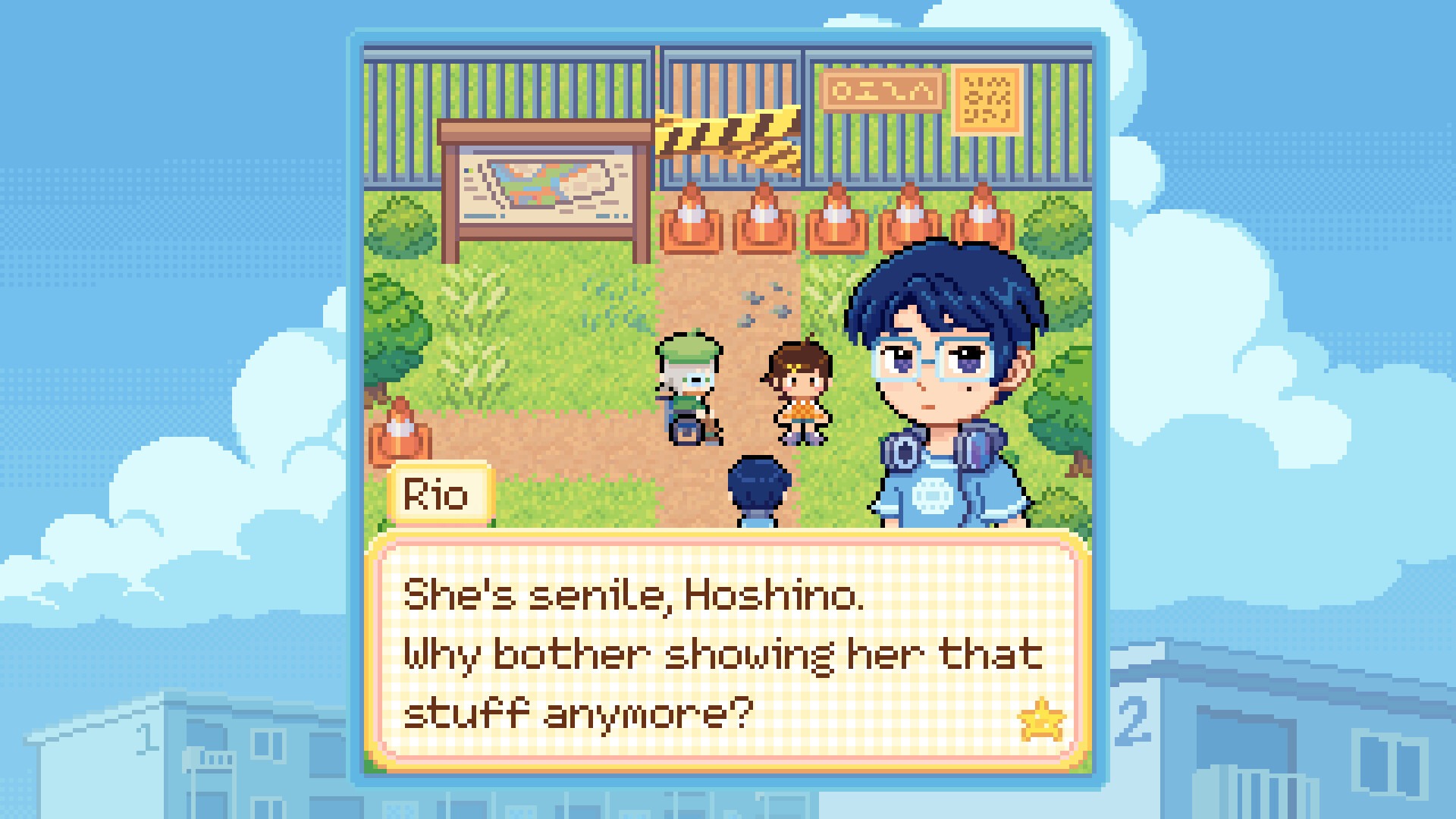
The heroine is 12-year-old Hoshino Kanaoka, who moves back to her Japanese hometown to be with her grandma, now living with dementia, and decides to revive the local summer festival by inviting her quirky neighbours. It all happens in a danchi, a Japanese housing complex. Steam lists 51 neighbours to gather RSVPs from, about 8-12 hours of single-player play, and no money, no combat and no time pressure. The US price is $14.99.

Four scores, one friendly mood
The 83 is OpenCritic’s Top Critic Average, and it lines up with the mean of the three Top Critic scores below (10, 8 and 7). Screen Hype’s 7.8 isn’t labelled Top Critic on OpenCritic.
| Outlet | Score | In their words |
|---|---|---|
| Noisy Pixel | 10/10 | “heartfelt and beautifully crafted” |
| Siliconera | 8/10 | “incredibly charming” |
| Screen Hype | 7.8/10 | “each one is entirely distinct” |
| Gamer Social Club | 7/10 | “cute”, but wants more “emotional gravitas” |
Charm built on the neighbours
The critics who liked it most point at the people. Noisy Pixel, with the top score, calls it “a heartfelt and beautifully crafted indie adventure that finds extraordinary wonder in everyday life.” Siliconera, at 8/10, calls it “an incredibly charming game about connecting with neighbors, preparing a festival, and doing kind things for people you love.”
Screen Hype says the plot is “kept minimalistic so that the focus can be on the characters themselves,” and that the cast “really makes the neighbourhood feel alive.” We think that’s the right thing to build a game like this around. Steam lists 51 neighbours to win over, and the reviewers who warmed to it most are praising exactly that.

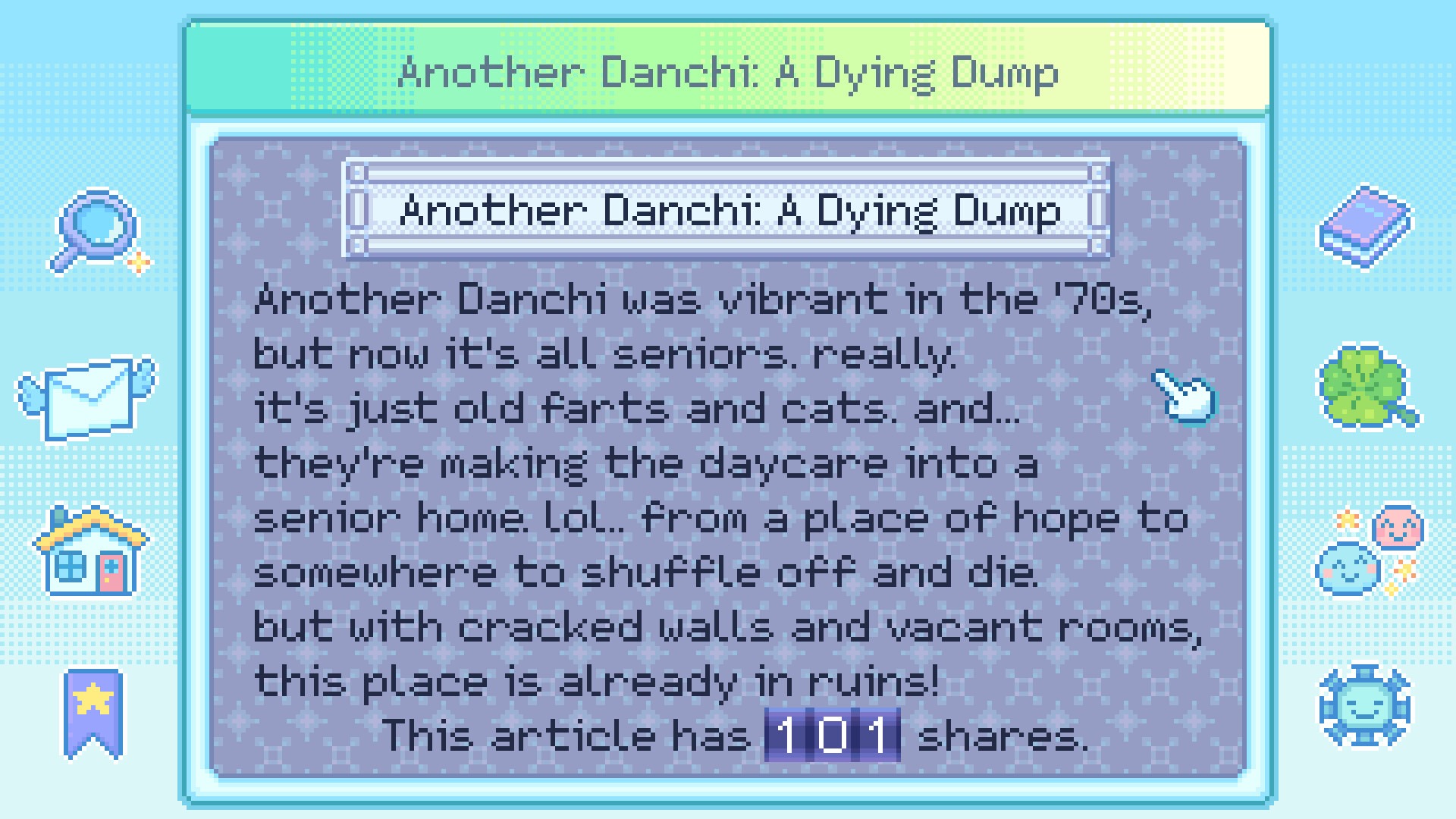
Screen Hype also liked the in-game internet: “every neighbour has their own web page in the game, and you get to learn more about them and their interests.” At the end of the day you can choose one neighbour to highlight on your own page, which the reviewer says “feels like a really important decision.”
Where it wants more weight
Gamer Social Club gave it a 7/10 and is the one reservation. The review calls the game “cute” and says it “does tell a good story,” but adds: “at times I wish it had a lot more emotional gravitas.”
The reviewer says the emotional beats it does hit, “especially as Hoshino faces difficult truths,” come late, and that had her growth been “more gradual and over the course of the 9 days, it may have hit closer to home.” The review also says Rio “feels like the very grounded real character,” but that we spend “such little time with him.”
Who it suits
- ✅ Buy if you want a talk-and-read adventure: Steam says there is no combat, no money and no time pressure.
- ✅ Buy if character-led stories appeal: Siliconera and Screen Hype both praise the neighbours.
- ❌ Skip if you want heavy emotional payoff throughout: Gamer Social Club found the weight arrives late.
- ❌ Skip if you want a deep pool of opinion first: OpenCritic lists only four critic reviews.
Our take
We’d call this an easy recommendation for anyone drawn to a gentle, story-first game at $14.99 in the US, with the sample-size warning attached. Four reviews, one of which holds back on emotional depth, is a good sign rather than a consensus.
If cosy is your lane, we’ve also rounded up the reviews for Theos: Cities of Myth and covered Truckful’s Deck Verified tick. Faraway’s one-button hook is the other small game worth a look, with critics split on its staying power.