Intel names its accelerator
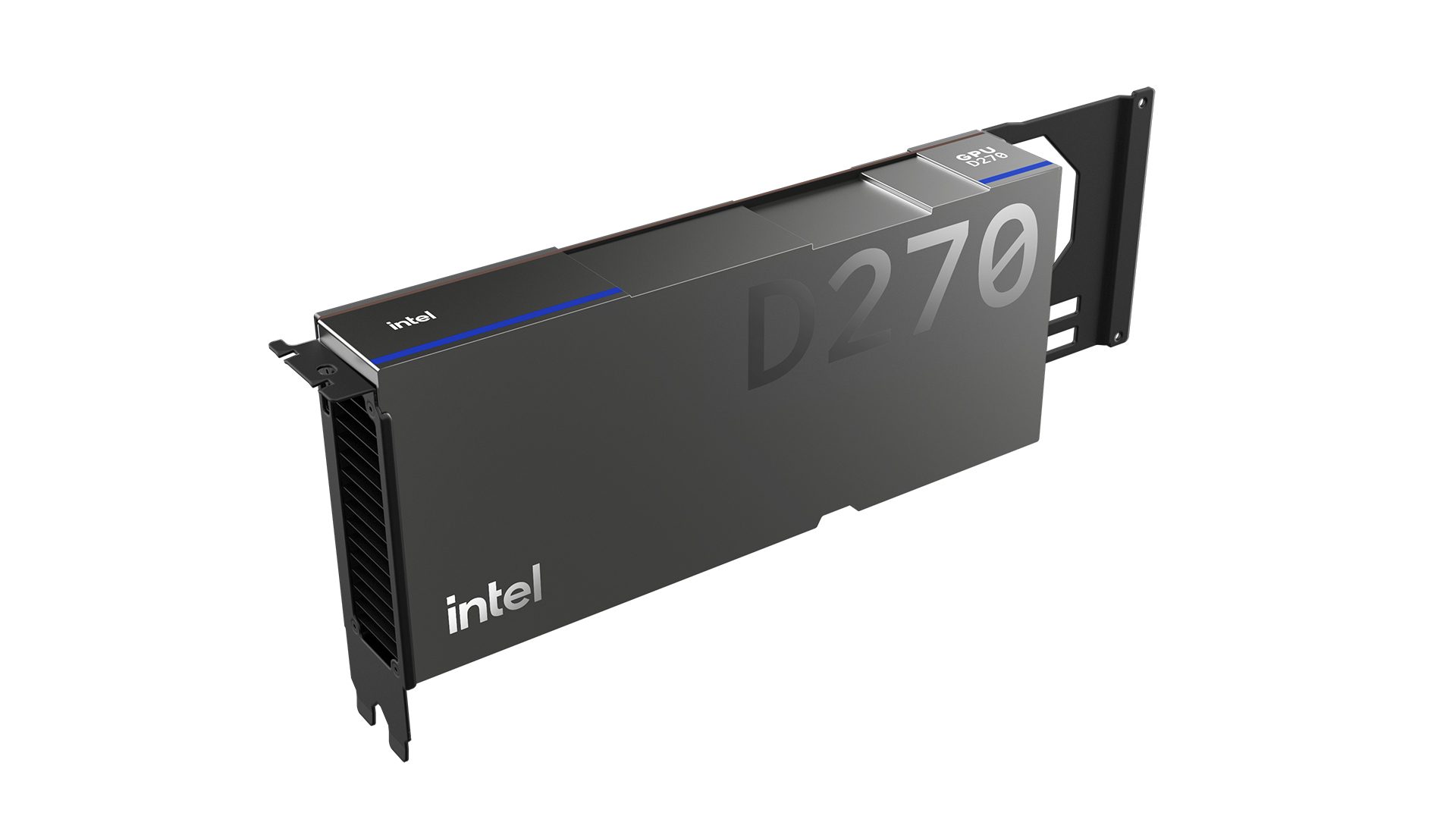
Intel’s “Crescent Island” inference accelerator now has a name: the Intel GPU D-Series, revealed at the 2026 OCP Global Summit on October 14. The first part is the GPU D270, an air-cooled PCIe card built on Xe3P, the full version of the Xe3 graphics architecture that debuted in Panther Lake laptops.
| Spec | Intel GPU D270 | Nvidia RTX Pro 6000 Server |
|---|---|---|
| Memory | Up to 480 GB LPDDR5X | 96 GB GDDR7 |
| FP8 compute | 1.3 PFLOPS | 2 PFLOPS |
| Power | 350 W, air-cooled | Up to 600 W |
| Bandwidth | 1.5 TB/s | Not listed here |
Nvidia figures are from CRN‘s comparison. Intel’s own card has 160 GB; TechRepublic reports that partner cards can go up to 480 GB.
What’s on the silicon
Per HotHardware, the D270 has 32 Xe3P cores and 256 XMX matrix engines, uses PCIe 5.0, and reportedly has no graphics output at all. Intel supports FP8, FP4 and microscaling formats like MXFP4, with PyTorch and vLLM on the software side.
Why gamers should care at all
This isn’t a gaming card, but Xe3P is the architecture the next Arc graphics are expected to build on, and LPDDR5X is a deliberate pick to avoid the GDDR and HBM supply that AI demand has been squeezing. Intel says customer sampling is underway, with no price or availability date yet, so the claimed numbers still need independent benchmarks.