A pad for the paste-averse
You don’t buy the Noctua NT-CP1 thermal pad to shave degrees off a Ryzen chip. You buy it, if you buy it at all, so you never have to think about paste again, and Noctua’s own technical note admits a freshly fitted pad runs warmer than fresh high-end paste.
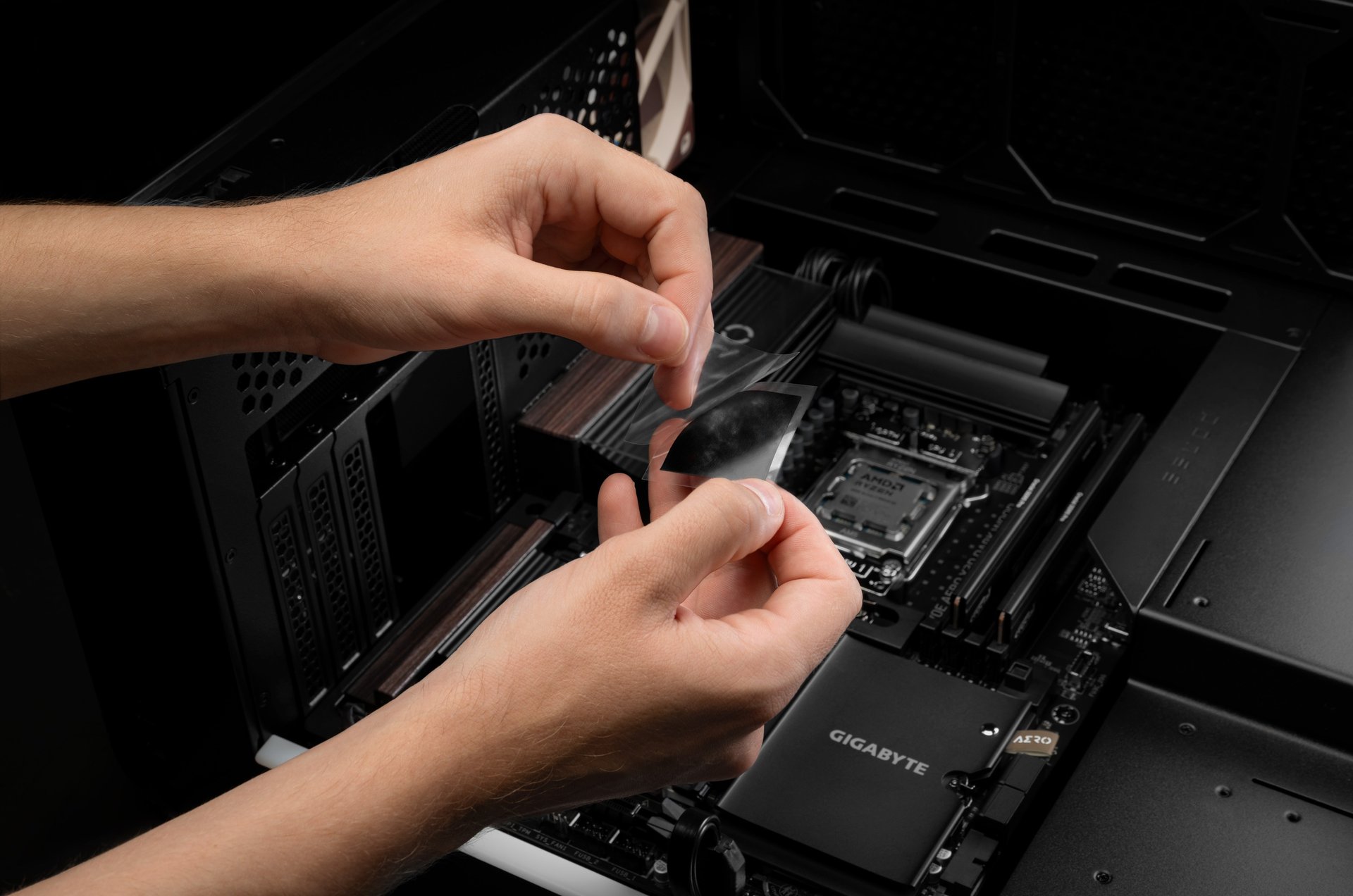
Noctua announced the NT-CP1 AM5/4 on 12 November 2026. It’s a 33 x 33 mm pad, made with Carbice, that fits both AM5 and AM4 processors. The spec sheet lists a nominal thickness of 90 µm (120 µm before activation) and a construction of aluminium, carbon and a polymer coating. Fitting is a “peel, press, peel” job, and Noctua says the slightly tacky coating keeps the contact surfaces electrically non-conductive before use, unless the polymer layer is penetrated.
Behind at first, steadier later
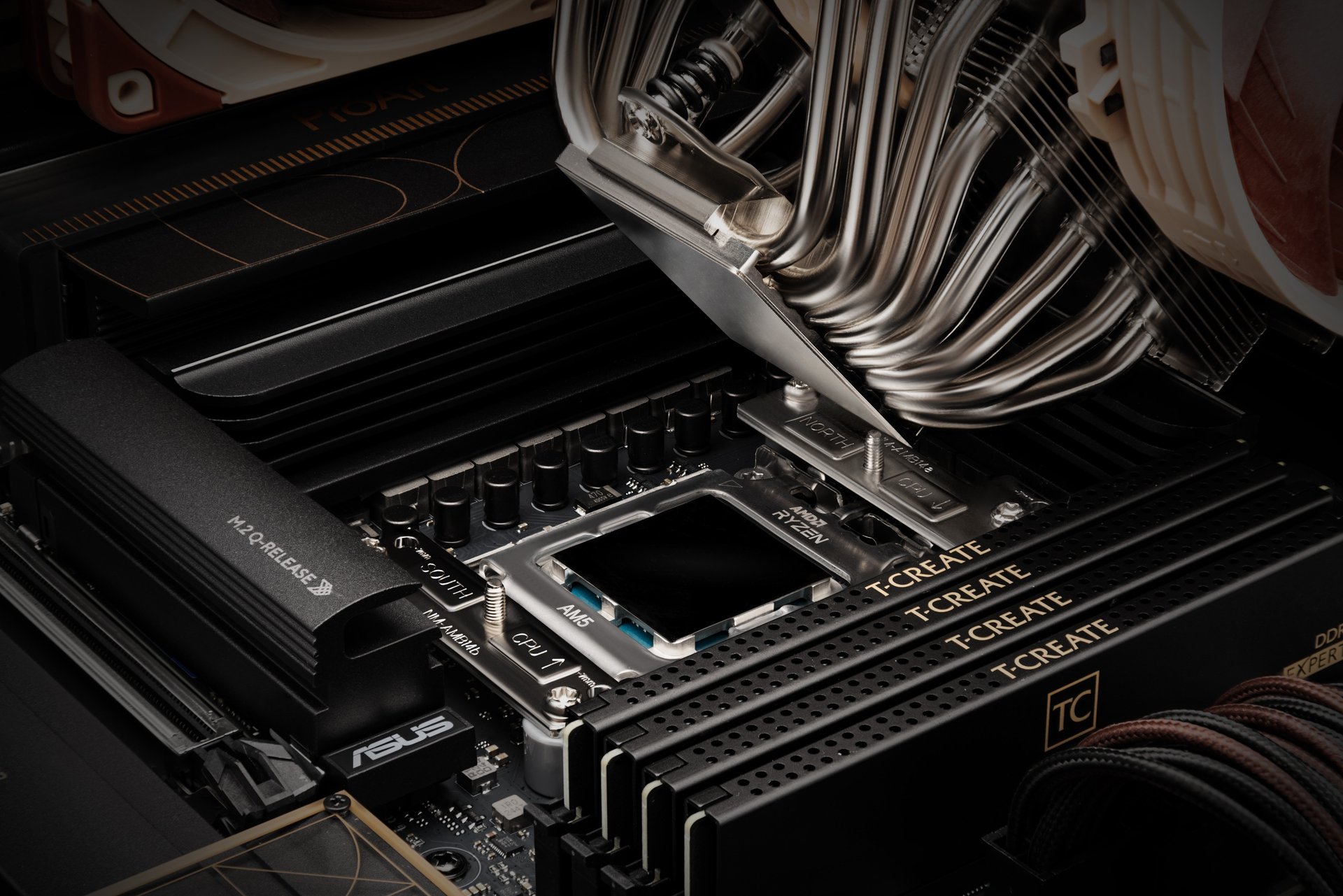
Noctua is upfront about the trade-off. A fresh pad’s initial performance is “clearly lower” than freshly applied high-end paste. The polymer reflows within 5–10 thermal cycles, and the nanotubes then take several hundred to several thousand cycles to fully conform to the CPU and cooler. Paste, Noctua says, starts strong and gradually loses ground to pump-out, dry-out and cracking.
The company’s own tests put numbers on that against its NT-H1 paste. With an NH-D15 G2 LBC on a Ryzen 9 9950X, the pad came within 2°C after around 900 cycles, within 1°C after around 1,600 and ahead at around 3,700. With an NL-LC1-24 liquid cooler on a Ryzen 9 7950X it overtook the paste after only 130 cycles. Across its tests the crossover ranged from 130 to 3,700 cycles, and a survey of 12 pads showed a ±1.7K spread on first runs.
VideoCardz makes the obvious point: the announcement focuses on installation and long-term stability rather than quantified temperature gains over paste. Those figures are Noctua’s, on Noctua’s rigs, against Noctua’s paste. We’d want independent tests, run long enough to cover the activation period, before treating any of it as settled.

Priced against paste
The suggested retail price is USD 24.95 / EUR 24.95, and the pad is available now through Noctua’s official Amazon stores, with other sales partners due to get stock shortly. The box also includes an NA-CW1 cleaning wipe. That is several tubes of paste, so this is a convenience purchase, not a bargain. Noctua itself says buyers who want the lowest temperatures immediately after installation may prefer a conventional paste.
Pump-out pitches have a mixed record: our story on the PhaseSheet PTM Pro GPU pad covered a pad aimed at pump-out whose gains were small. Noctua is selling something different here, long-term stability rather than headline degrees, but the same scepticism applies until numbers arrive.
- Buy if: you want a Ryzen build you won’t reopen, such as the chips in our 9800X3D vs 7800X3D comparison, and you’d rather skip paste application.
- Wait if: you chase the lowest temperatures on day one, or you want independent results before paying $24.95.
Our view: it’s a smart idea for the set-and-forget crowd and a poor one for anyone benchmarking this week. We’d wait for third-party testing across hundreds of cycles first.