FCC cleared, no price
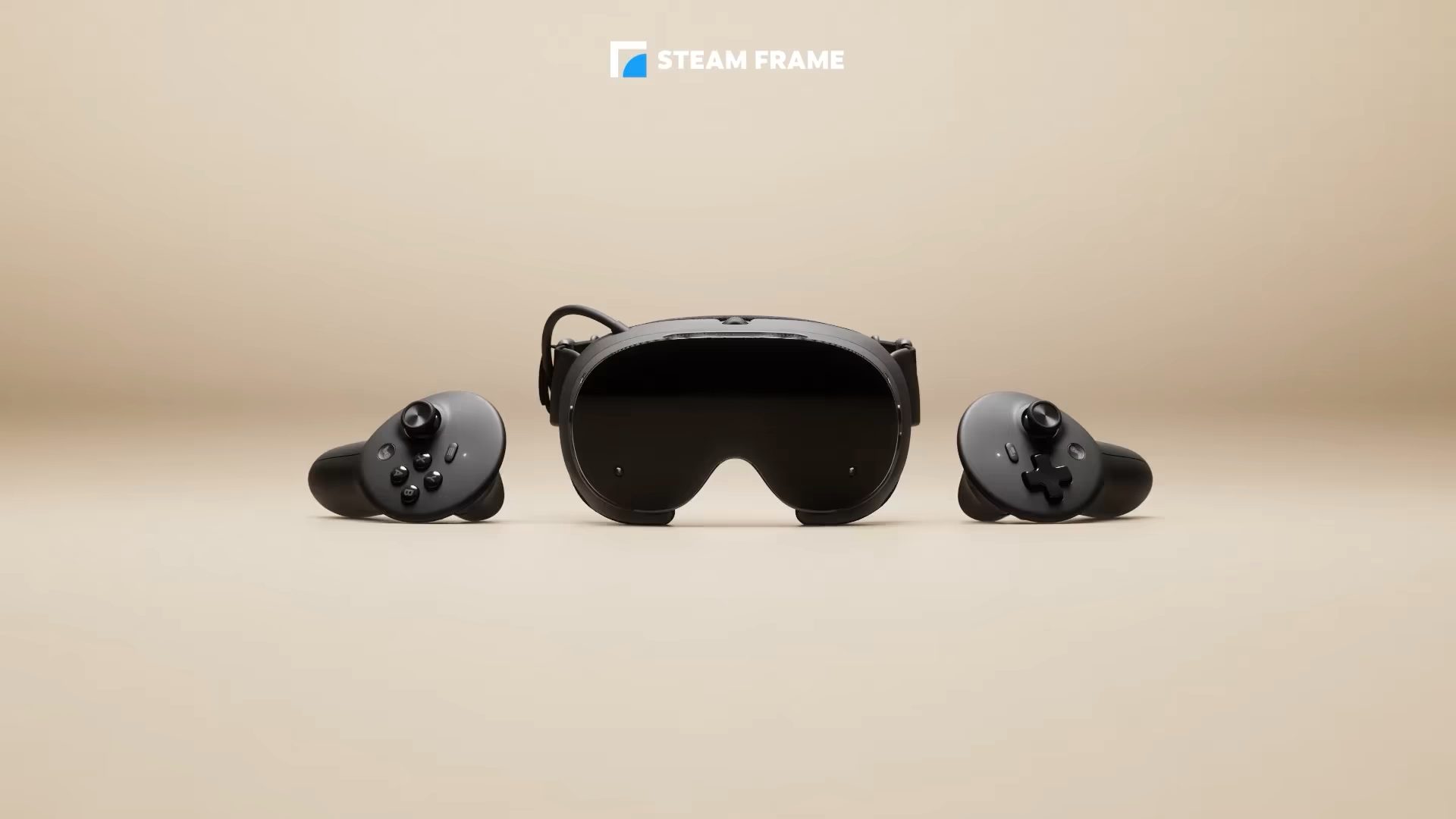
Valve’s Steam Frame headset cleared the last regulatory gate standing between it and a US retail shelf on July 29, when the FCC granted equipment authorization under ID 2AES4-1015. A month later, Valve still hasn’t announced a launch date or a price, even as every other signal points to a device that’s ready to ship.
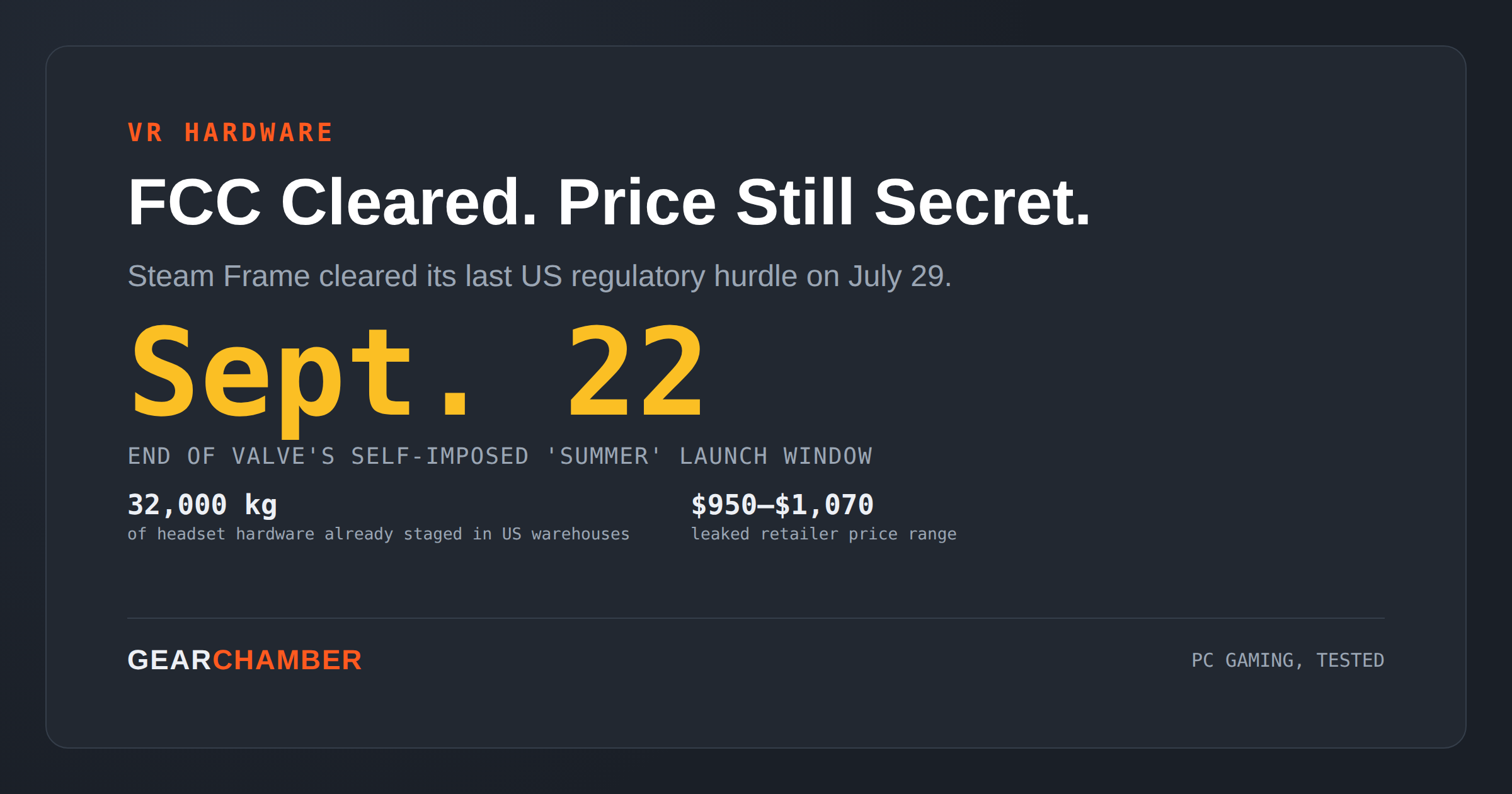
The regulatory filing is one of the last steps a radio-equipped device needs before it can legally be sold in the United States, and import records show Valve has already been acting like it’s cleared: roughly 32,000 kg of hardware labeled “Virtual Reality Devices” moved through customs into the company’s US warehouses back in June. Under the hood, leaks and unboxings through August have converged on the same spec sheet — a Snapdragon chipset, 16GB of LPDDR5 memory, dual 2160×2160 LCD panels through pancake lenses, eye tracking, and 256GB or 1TB of storage with a microSD slot for more. The included controllers double as a standard gamepad, with a D-pad on the left and face buttons on the right, and Valve is bundling a 6GHz wireless dongle rather than leaning on standard Wi-Fi for the headset-to-PC link.
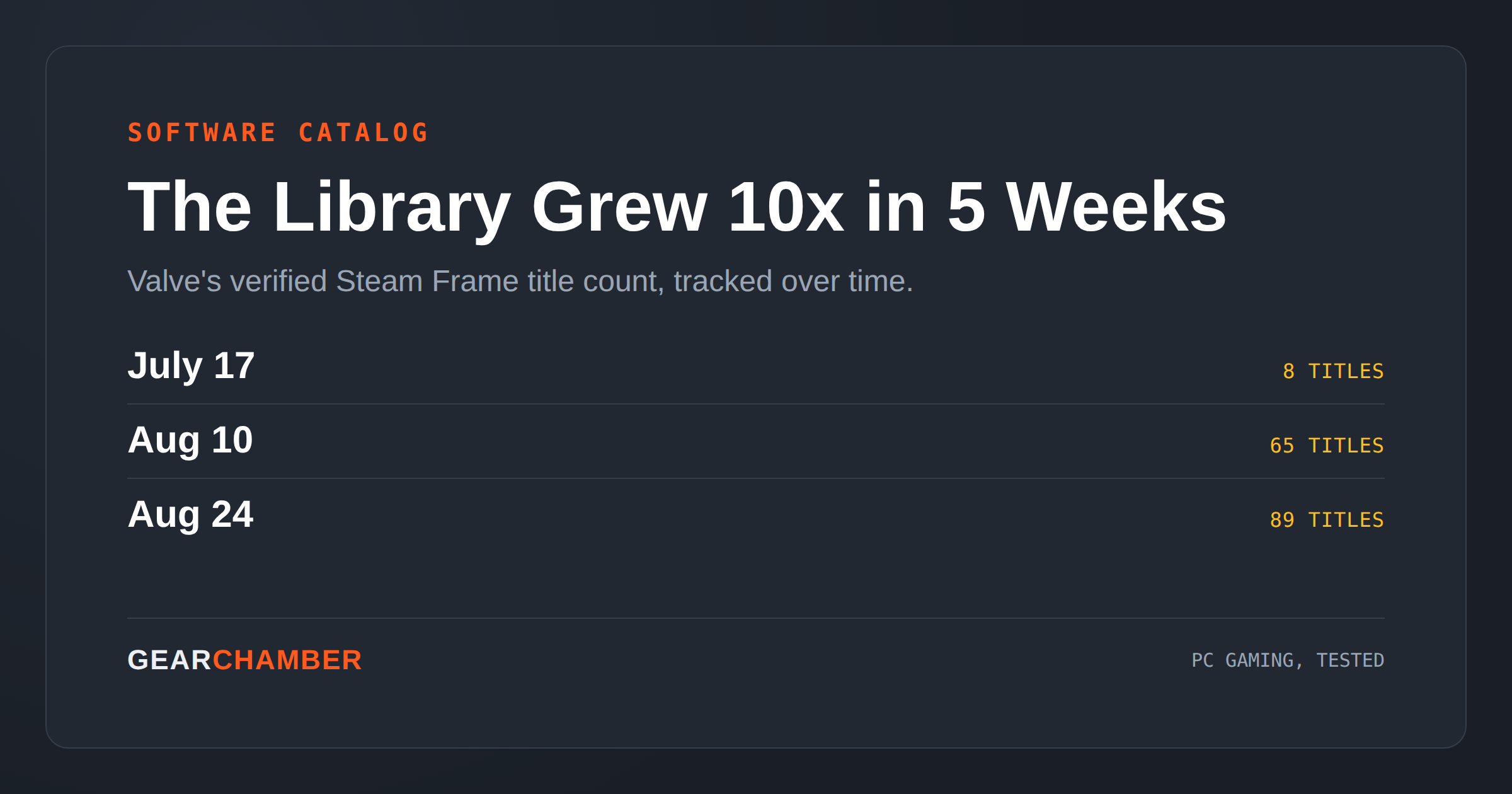
The clearest sign of urgency is the software side. Valve’s “Great on Frame” list of verified titles sat at just 8 games on July 17. By August 10 it had jumped to 65, and by August 24 it hit 89 — a tenfold increase in five weeks that’s the fastest-moving public signal of an imminent launch. Pricing is the one piece Valve hasn’t touched officially, but a small batch of units already reached buyers on June 29 through a randomized reservation system at $1,049 for 512GB and $1,349 for 2TB, and retailer database leaks since then point to a more likely retail range of roughly $950 to $1,070.
Valve set its own deadline by calling this a “summer 2026” launch, which under most reasonable readings ends September 22 — leaving well under a month as of this week. That’s a tight window for a company with a well-earned reputation for missing self-imposed dates, and nothing here is an official commitment. But the combination of a closed regulatory loop, staged inventory, and a rapidly filling game catalog is a different pattern than Valve’s usual hardware silence.
For anyone holding off on a standalone VR purchase, the practical advice is simple: wait. If Steam Frame lands anywhere near the leaked $950–$1,070 range with SteamOS and a 90-title-plus launch catalog, it undercuts most competing standalone headsets on software flexibility even if it doesn’t win on raw price. Watch for an actual reservation page or price announcement in the next few weeks — that’s the next concrete signal, not another leak.