Data center takes the headline
The AMD Q3 2026 results are a data center story, and the line PC players should care about sits much lower down: Gaming revenue fell 40% year on year to $773 million. Total revenue was a record $13.4 billion, up 45%, and Data Center alone made $8.5 billion, up 97%.
AMD reported on 3 November (US Eastern time) for the quarter that ended 26 September 2026. “We delivered a record quarter with revenue exceeding the high end of our guidance as Data Center segment sales nearly doubled year-over-year,” said CEO Dr. Lisa Su. AMD ties the Data Center jump to strong demand for EPYC processors and the launch of its Instinct MI450 Series GPUs.
| Segment ($M) | Q3 2026 | Q3 2025 | Change |
|---|---|---|---|
| Data Center | 8,546 | 4,341 | Up 97% |
| Client | 2,949 | 2,750 | Up 7% |
| Gaming | 773 | 1,298 | Down 40% |
| Embedded | 1,109 | 857 | Up 29% |
What AMD says about the Gaming drop
AMD’s explanation is one short clause: Gaming revenue was $773 million, down 40% year on year, “due to lower semi-custom and graphics revenue.” That is all the press release says on the cause, and it doesn’t break the two apart.
Tom’s Hardware fills in more. It reports that the Gaming line covers discrete graphics cards and game console chips, that Microsoft and Sony bought fewer console SoCs, and that sales of discrete Radeon RX GPUs remained weak during the quarter. That is Tom’s account, not wording from AMD’s release.
The size of the fall is partly a comparison problem. Gaming made $1,298 million in the third quarter of 2025 and $779 million in the second quarter of 2026, so it was close to flat quarter on quarter. By our arithmetic from AMD’s figures, Gaming has gone from about 14% of total revenue a year ago to under 6%. The combined Client and Gaming segment earned $573 million in operating income, against $867 million a year earlier.
Client is holding, with a warning attached
Client revenue was $2.9 billion, up 7%, which AMD puts down to sales of Ryzen mobile processors. That sits oddly beside AMD’s record 34.9% desktop share, which came as overall CPU shipments slid, and it won’t last on current guidance. Tom’s Hardware reports that AMD expects Client and Gaming to contract by more than 20% sequentially in the fourth quarter as higher memory prices weaken PC demand.
Su was blunter about next year, according to Tom’s coverage of the earnings call: “In 2027, we are planning for PC market unit shipments to decline by a double-digit percentage.” She added that AMD expects to outperform the market. Intel is telling investors a similar thing, as we covered when Intel pitched Nova Lake while warning the PC market will shrink. We wouldn’t count on relief in parts pricing while both of the big CPU makers are planning for fewer PCs.
A $17 billion quarter would pass Intel
For the fourth quarter AMD expects revenue of approximately $17 billion, plus or minus 3%. At the midpoint that is growth of about 66% on a year ago and about 27% on this quarter. AMD also expects a non-GAAP gross margin of about 55%.
Tom’s Hardware compares that with Intel, which it says expects fourth-quarter revenue of $15 billion to $16 billion. On those numbers AMD would outsell Intel for the first time, by roughly $1.5 billion at the midpoints. It is guidance, not a result, and AMD’s own release carries the usual warning that actual results could differ materially.
On margins, the label matters. On a GAAP basis AMD’s third-quarter gross margin was 54% and diluted earnings per share were $1.46. On a non-GAAP basis they were 56% and $2.09. AMD’s reconciliation lists a $1.097 billion change in the fair value of a warrant liability, tied to its share price, among the items stripped out.
What it means for a PC build
Su told analysts, in Tom’s quote, that she expects data center to be “more than eighty percent of our total revenue in 2027.” The PC highlights in AMD’s release are Ryzen AI Max PRO 400 Series systems and the Threadripper Halo Station; no Radeon card is among them.
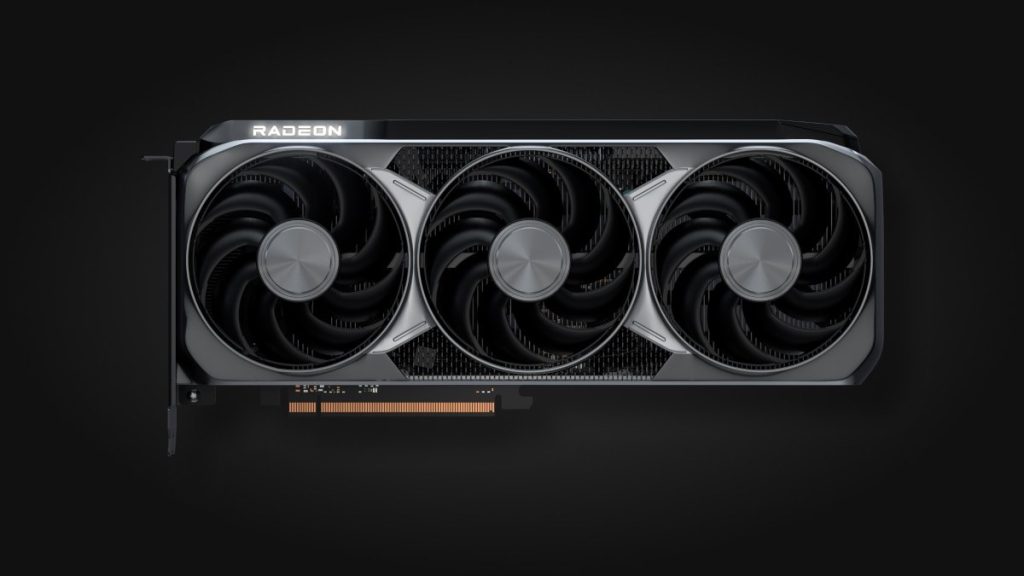
We think the sensible reading is a demand signal, not a strategy announcement. AMD hasn’t said in this release what it plans for its gaming products, and nothing in the numbers changes what a card or CPU costs today. If you’re choosing between Radeon and GeForce, the argument in our AMD vs Nvidia GPU comparison about the software stack still matters more than a quarterly revenue line, and our PC Builder is the place to sketch a parts list against current prices.
The number to watch next is Gaming in the fourth-quarter report. If it stays near $773 million while the Data Center line heads towards AMD’s guided total, Gaming will be a smaller slice of the company than it has been in years.