Quiet boxes, modest chips
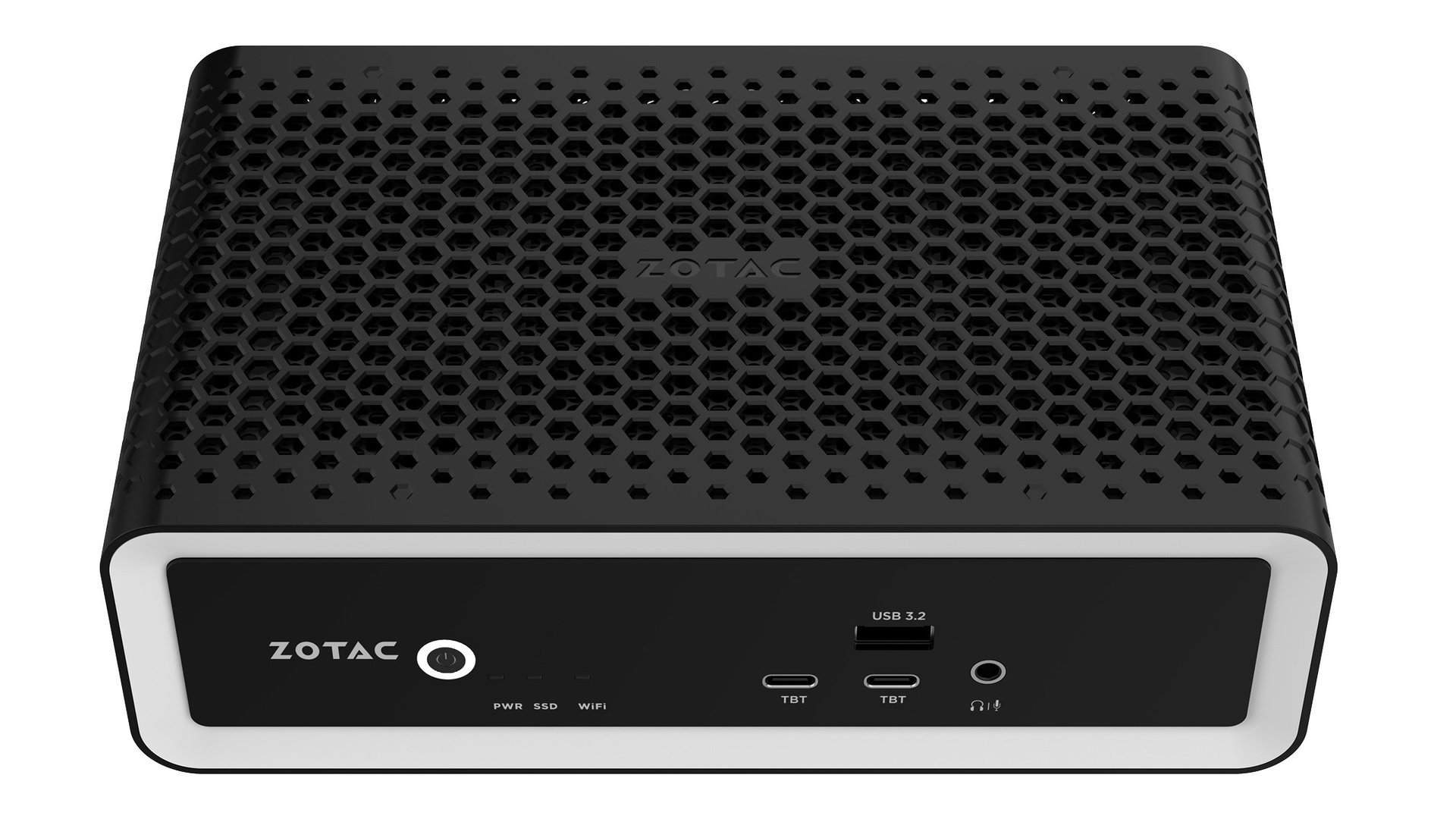
Nothing in ZOTAC’s new ZBOX nano line is going to make a frame-rate chart exciting, and that’s fine. These are three fanless mini PCs built on Intel’s low-power Wildcat Lake chips, meant for the desk, shelf or TV cabinet where silence matters more than speed. The ZBOX CI431 nano, CI451 nano and CI471 nano turned up as listings on ZOTAC’s webstore, with no price and no availability date.
The specs here come from coverage of those listings by FanlessTech, which spotted them first, plus TechPowerUp, VideoCardz and Notebookcheck. The three machines share one chassis and differ in the chip: a Core 3 304, a Core 5 320 or a Core 7 350.
| Model | Chip | Cores | Max boost |
|---|---|---|---|
| ZBOX CI431 nano | Core 3 304 | 5 (1 P + 4 LP-E) | 4.3 GHz |
| ZBOX CI451 nano | Core 5 320 | 6 (2 P + 4 LP-E) | 4.6 GHz |
| ZBOX CI471 nano | Core 7 350 | 6 (2 P + 4 LP-E) | 4.8 GHz |
Low power by design
Per TechPowerUp and VideoCardz, all three chips carry a 15 W base power and a 35 W maximum turbo power. Graphics are Intel Xe3: one Xe-core on the Core 3 304 and two on the Core 5 and Core 7 models. The built-in NPUs are listed at up to 15, 16 and 17 TOPS respectively.
We think that settles the gaming question. With those power figures and one or two Xe3 cores, this is hardware for an office desk, a media setup or a quiet always-on box, not something to buy for new 3D games. None of the coverage we read includes benchmarks, so we won’t guess at performance, and anyone who wants to play should look at something with far more graphics muscle.
Small, but not tiny
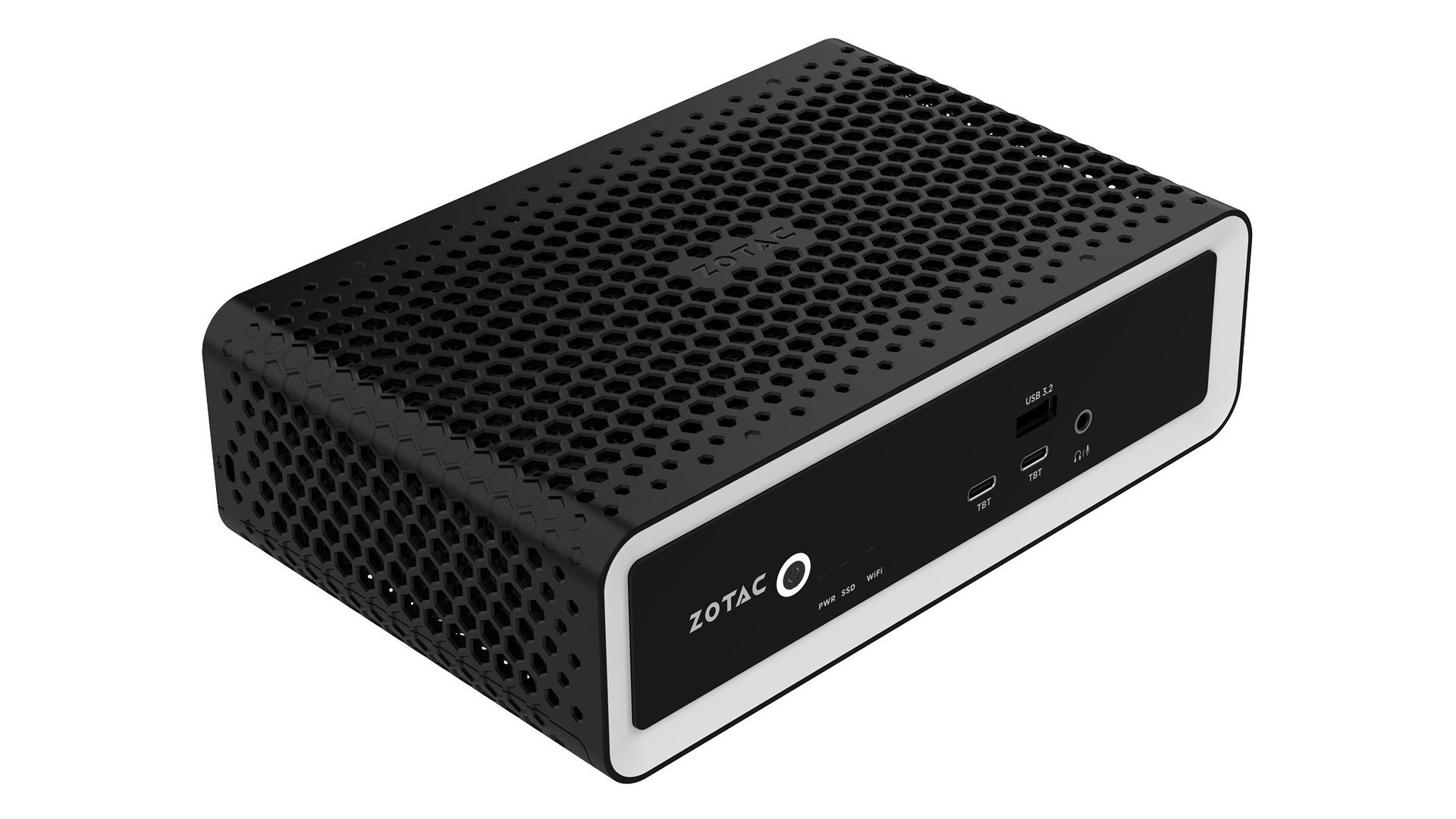
The shared chassis measures 204 × 129 × 68 mm, or 1.79 litres. Notebookcheck points out that’s noticeably bigger than the 0.9-litre ZBOX CI360 nano, which had dual M.2 slots and dual Ethernet ports; the new models have one of each. If you want something palm-sized instead, ASUS’s ProArt GR1X is a different kind of machine, and it has no price yet either.
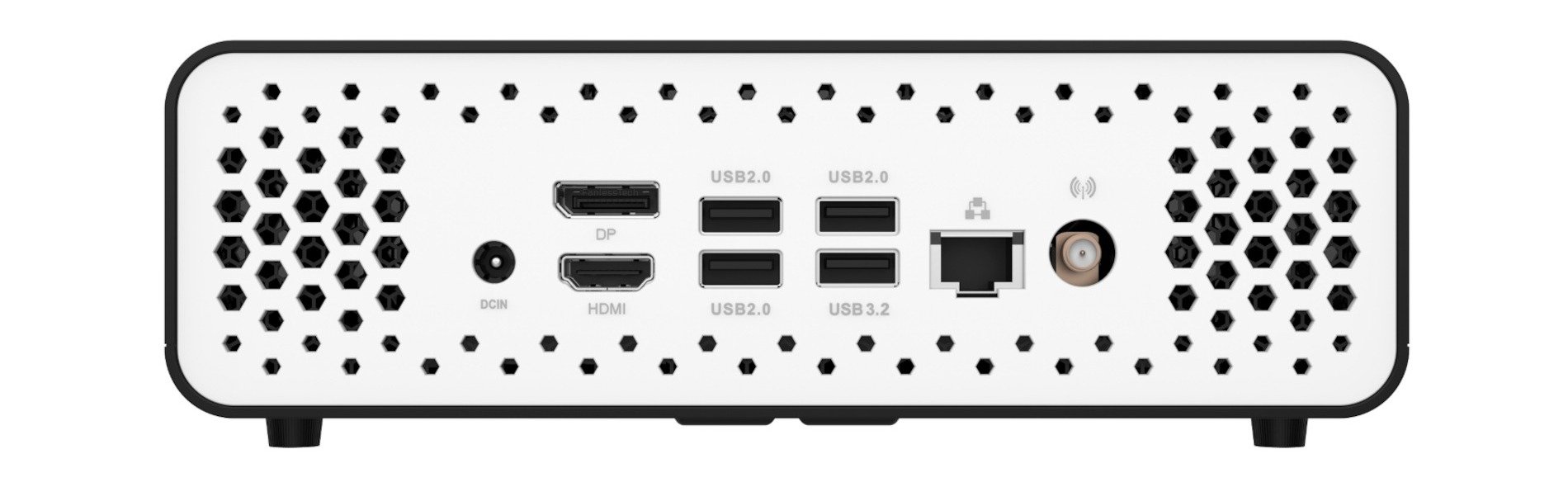
Inside, the coverage lists a single SO-DIMM slot for up to 64 GB of DDR5 (DDR5-6400/5600, per VideoCardz and Notebookcheck) and one M.2 2280 PCIe 4.0 x4 slot. Ports include two Thunderbolt 4, two USB 3.2 Gen 2 Type-A, three USB 2.0, 2.5GbE, Wi-Fi 7 and Bluetooth 5.4. HDMI 2.0b, DisplayPort 2.0 and DisplayPort over Thunderbolt 4 can drive up to three 4K displays at 60 Hz, according to TechPowerUp and Notebookcheck.
They’re barebones, so memory and storage are on you. TechPowerUp says a VESA mounting kit and an external 65 W power adapter come with each one. VideoCardz adds that they’re listed as Windows 11 ready, though you’d need to supply the parts first.
Wait for a price
Without a price there is nothing to weigh these against, and we’d hold off until ZOTAC names a number. Intel is pitching a very different buyer elsewhere, as its Nova Lake desktop push shows.
For a silent, small Windows box, the two Thunderbolt 4 ports and 2.5GbE make this a sensible shape. We’d just like to see it priced before getting excited.