TechSpot’s harsh verdict
TechSpot gave the GeForce RTX 5060 Ti 8GB a 30, called it “instantly obsolete”, and described it as “possibly the worst trap we’ve ever seen laid for mainstream gamers.” The 30 at the top of this page is TechSpot’s score, the only numeric lab score for the 8GB model, and every other lab result we found points the same way.
Lab scores
| Outlet | Score / verdict | Key number |
|---|---|---|
| TechSpot | 30/100, “Avoid the 8GB Trap” | 16GB: 120% better 1% lows, TLOU II 4K |
| Hardware Unboxed (via TweakTown) | “Instantly obsolete” | HFW 4K: 16GB 3.5x faster |
| Tom’s Hardware | Reporting HUB data | Indiana Jones crashed at 1080p Ultra on 8GB |
| TechSpot vs Arc B580 | “A steaming pile – even at $380” | Slower than a $250 B580 in some games |
Why the score is this low
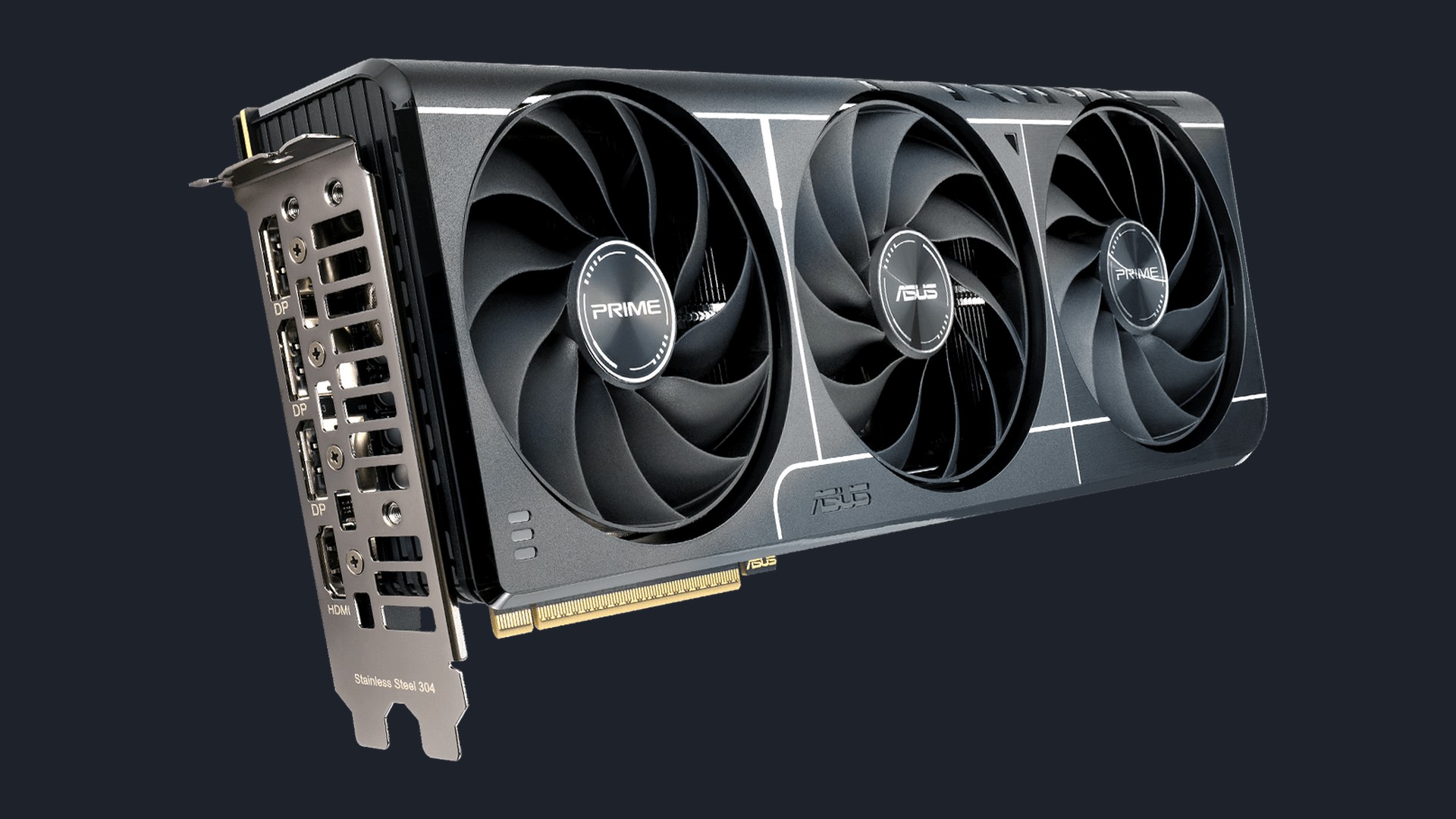
The GPU isn’t the problem. Both RTX 5060 Ti models use the same GB206 chip with 4,608 CUDA cores on a 128-bit bus (Tom’s Hardware). The 8GB buffer is. Nvidia didn’t send 8GB samples to reviewers, so TechSpot bought an ASUS Prime card and tested it on a 9800X3D with PCIe 5.0, which it calls “essentially a best-case scenario.” It says PCIe 4.0 systems will do worse, and PCIe 3.0 “drastically worse.”
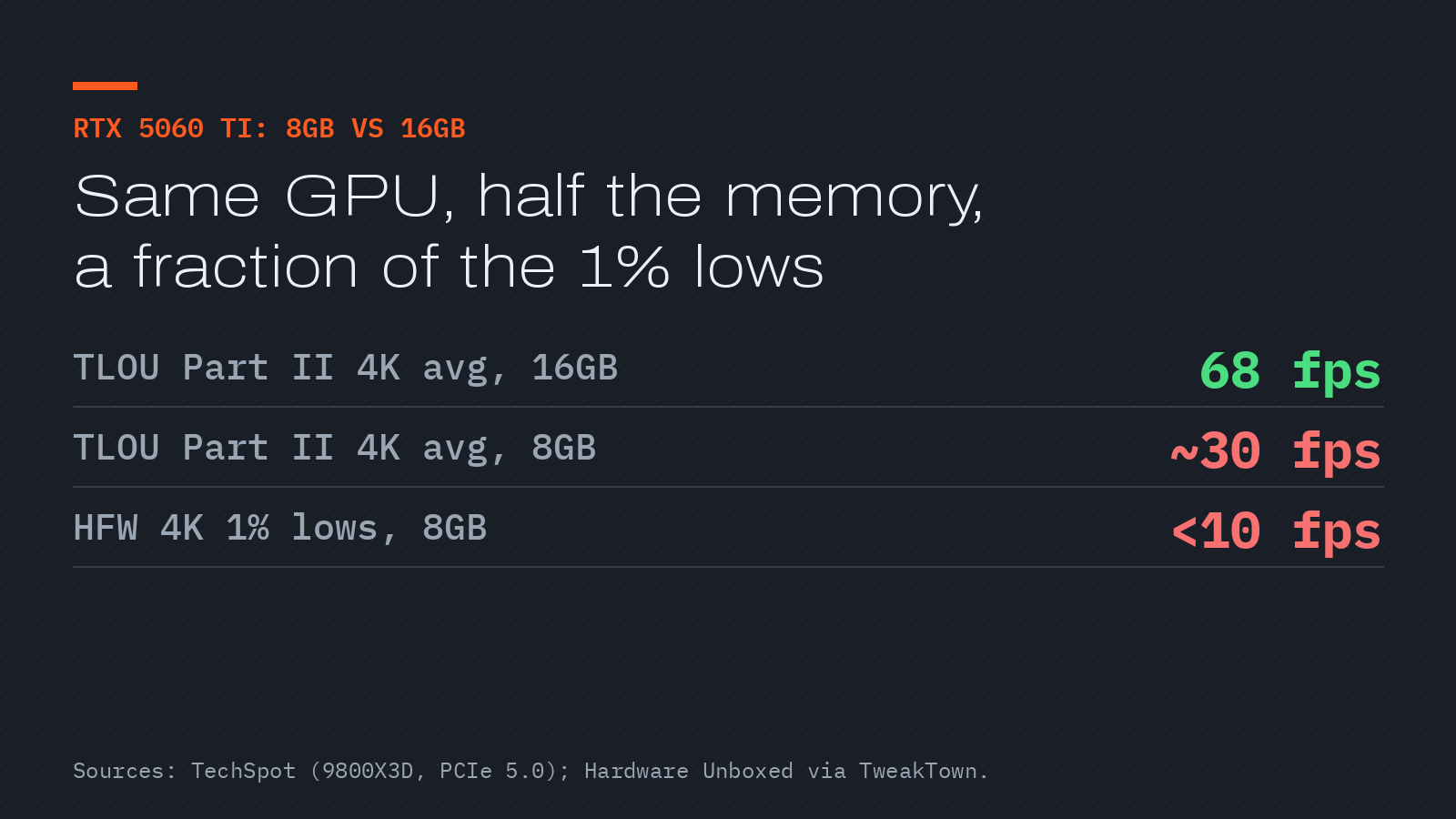
At 4K in The Last of Us Part II, TechSpot’s 16GB card averaged 68 fps while the 8GB model “barely surpassed 30 fps,” with 120% better 1% lows on the 16GB card. Hardware Unboxed’s Horizon Forbidden West run at 4K with DLSS and Very High settings had the 16GB card averaging 72 fps, 3.5 times faster, with the 8GB card’s 1% lows dropping below 10 fps, TweakTown reports. Tom’s Hardware adds texture pop-in in Hogwarts Legacy and Space Marine 2.
TechSpot is fair about the limits of the problem: “8GB of VRAM is still enough for the majority of games today,” and lowering settings often helps. Its objection is the price and the name. The $380 MSRP sits $50 under the 16GB model’s $430, both cards are sold as “RTX 5060 Ti”, and the 16GB card “delivered a consistently superior experience” in all 15 games it compared.
Who should buy, and who should wait
- Skip it at anything near $380. TechSpot’s advice is to avoid it, and its follow-up found a $250 Arc B580 beating it in VRAM-limited games.
- Buy the 16GB RTX 5060 Ti instead if your budget stretches about $50 further. Every lab here measured the same GPU behaving like a different class of card once it had the memory.
- Check the box on prebuilts. TechSpot warns that Nvidia is “counting on the pre-built PC market”, where the spec sheet often just says “RTX 5060 Ti”.
If you already own one, ASUS’s product page lists the card’s specs; lowering texture settings is the lever TechSpot says still works.